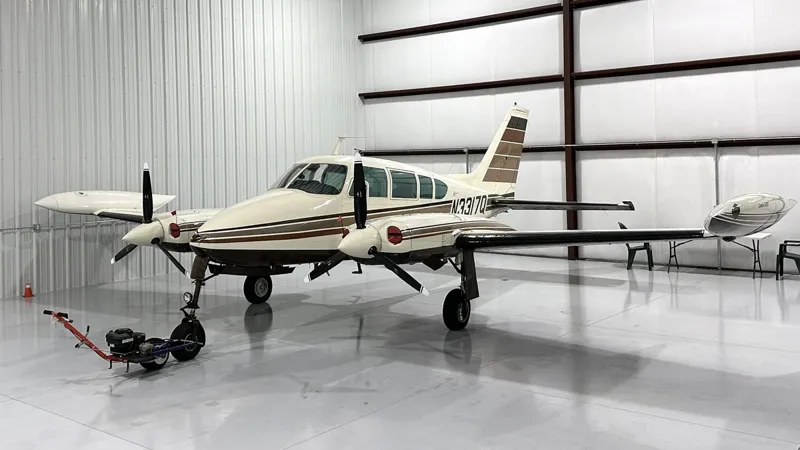
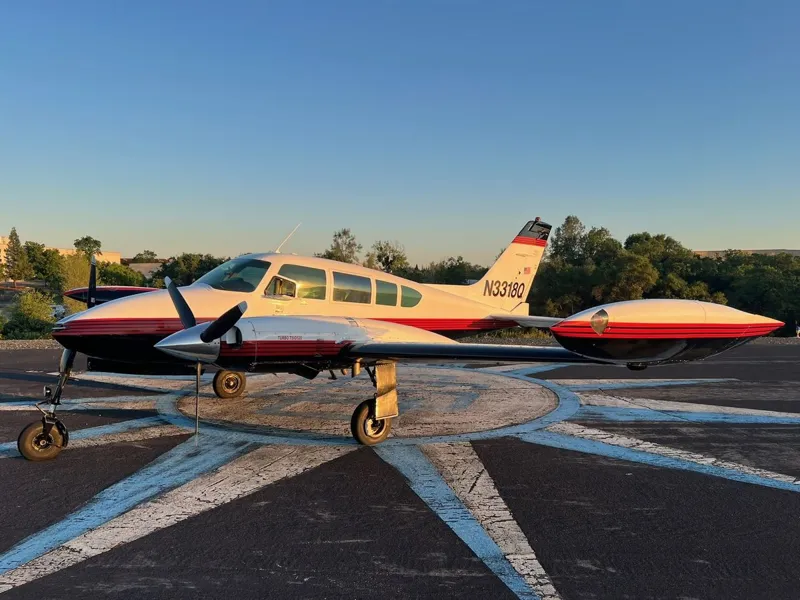
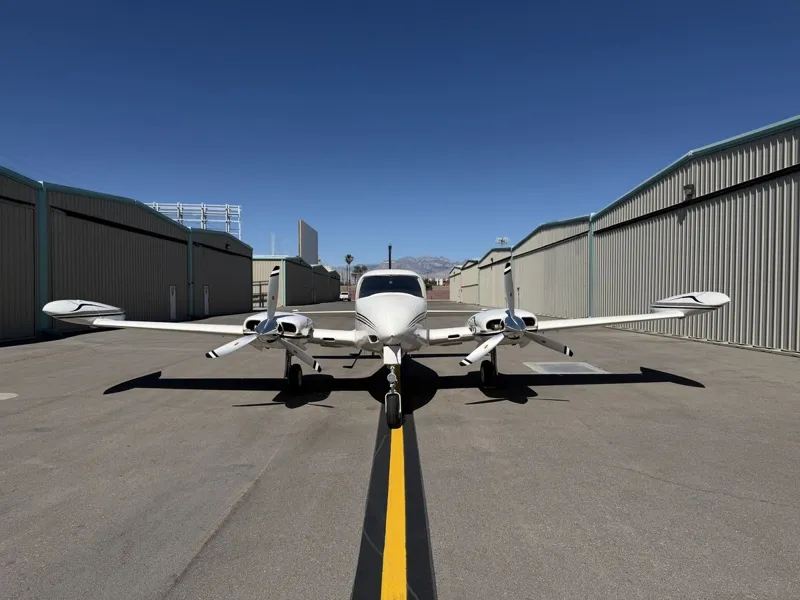
Cessna 320 Aircraft (Skyknight)

The Cessna 320 Skyknight is the turbocharged six-seat 310 — produced 1962-1969 with twin turbocharged Continental engines and one extra cabin window. Short production and a small used market. **Cessna 335:** essentially an unpressurised 340 (1979-1980, very short production, rare).
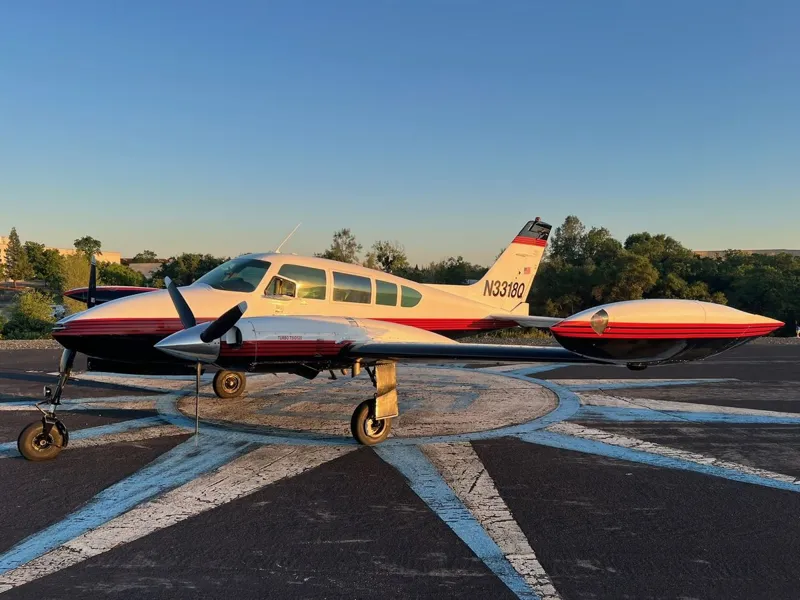
Cessna 320 aircraft for sale

5 used Cessna 320 aircraft for sale · 6-seat · Used median asking $105,000 · updated 20 hours ago

Cessna 320 Specifications

Model spec

The Cessna 320 is a 6-seat multi engine piston with a cruise speed of 200 kt (370 km/h), a range of 900 nm (1,667 km), and a useful load of 1,800 lbs (816 kg).

Performance
Cruise200 kt (370 km/h)
Max Speed215 kt (398 km/h)
Range900 nm (1,667 km)
Service Ceiling26,000 ft (7,925 m)
Engine & Fuel
EngineCONTINENTAL TSIO-470-B
Horsepower260 HP
Fuel Capacity100.0 gal (378 L)
Fuel Burn28.0 GPH (106 L/h)
TBO1,500 hrs
Weights & Seats
Seats6
Max Gross Weight5,200 lbs (2,359 kg)
Useful Load1,800 lbs (816 kg)
Production1962–1967

Cessna 320 for Sale

Cessna 320 asking prices range from $98,750 to $125,000, with a median of $105,000.
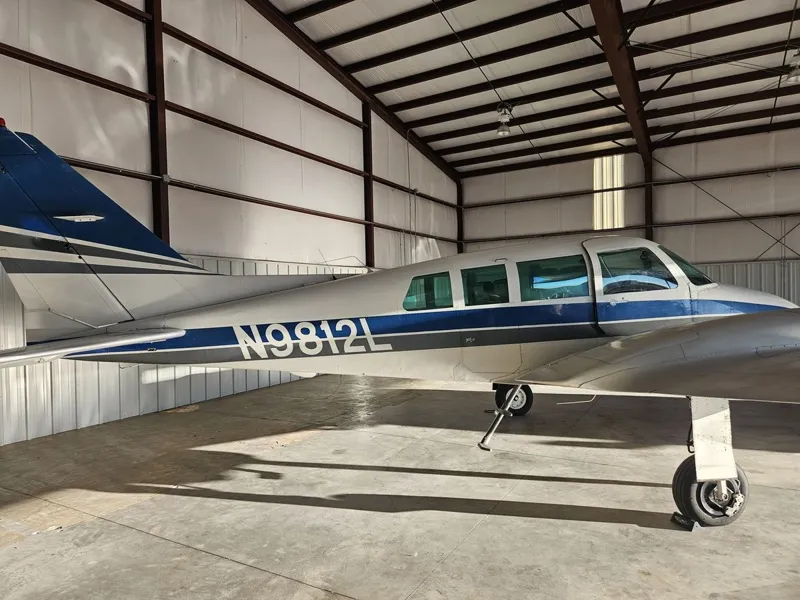
$98,750
For Sale
Total Time 4,503
Reg# N9812L US
Location Farmington, NM
Multiple sources
Listed 1mo ago
$110,000
For Sale
Total Time 4,800
Reg# N3317Q US
Location Auburn, CA
$125,000
For Sale
Total Time 5,180
Reg# N3318Q US
Location Auburn, CA
Multiple sources
Contact for Price
On Request
Total Time 8,816
Reg# N61RW US
Location Las Vegas, NV
Listed 2mo ago
Limited info
$100,000
For Sale
Reg# N320SK US
Location BEJOU, MN

Compare Cessna 320

See how the Cessna 320 stacks up against similar aircraft in specs, price, and operating costs.

Cessna 320 Price & Cost

How much does a Cessna 320 cost? Used 320 prices: $98K – $125K, average $108K (median $105K), across 4 priced of 5 active listings.

Cessna 320 Price Guide

Key price factors: engine time to overhaul, year and airframe hours, avionics, damage history and logbook completeness — see the buying guide below for the full pre-purchase checklist.

Cessna 320 Cost of Ownership estimate
Fuel (28.0 GPH × $6.20, 100 hrs)$17,360/yr
Annual Fixed (hangar, insurance, annual)$26,000/yr
Variable (per hour)$300/hr
Engine Overhaul (every 1,500 hrs)$40,000
Estimates at 100 flight hours/year. Actual costs vary by usage, location and insurance.

Two turbocharged engines burn approximately 28-32 gph combined - above the normally aspirated 310 by the turbocharger fuel premium. Turbocharger inspection items at annual add cost above the 310, and two-engine, two-turbocharger maintenance is among the more involved in the vintage piston-twin category. Turbo-family overhaul cost applies to both engines. As a vintage aircraft the 320 benefits from a thorough pre-buy; ongoing costs after reconditioning are predictable.

Buying a Used Cessna 320

Buying a Cessna 320 comes down to a focused pre-purchase checklist — here is what matters most on this model:

What to check before buying

The Cessna 320 Skyknight is a turbocharged six-seat twin - two turbocharged Continental TSIO-470 engines (260 hp each), retractable gear, approximately 200 knots cruise, 900 nm range, and a ceiling around 26,000-30,000 feet. It is the turbocharged development of the Cessna 310, sharing the same basic airframe with engines that hold power at altitude and push cruise above the normally aspirated 310's ceiling.

310 versus 320: the turbocharger's mission. The 320 adds turbocharged altitude capability to the 310 airframe - a ceiling several thousand feet above the normally aspirated 310, with proportionally higher cruise at altitude. For operators who regularly fly above 12,000 feet or need above-weather access, the 320 provides capability the 310 cannot. Below 8,000-10,000 feet, the performance difference is modest.

Turbocharged twin maintenance. Two turbocharged engines in a retractable twin carry turbocharger-system maintenance (wastegate, exhaust, turbine) across both engines. The annual covers both turbochargers in addition to standard gear and engine items, making the 320 more maintenance-intensive than the 310 - and considerably more so than a comparable piston single.

Buy it if you need turbocharged altitude capability in the 310-family retractable twin, and the higher operating cost versus a normally aspirated 310 is justified by your altitude requirements.

Frequently Asked Questions — Cessna 320

About the Cessna 320 Skyknight
The Cessna 320 Skyknight was produced 1962–1969, the turbocharged evolution of the 310 twin. It uses two turbocharged Continental TSIO-470 engines (TSIO-520 on later variants), providing maintained performance for high-altitude IFR. The 320 is unpressurized — faster than the standard 310 at altitude but without cabin pressurization. It was succeeded by the T310, which continued the turbocharged 310 line after the 320's production ended.
320 vs standard 310 — what does the turbo add?
Maintained cruise power at altitude — approximately 15–20 kt faster than the normally-aspirated 310 above 10,000 ft. The 320 delivers the same basic 310 airframe and seating with altitude performance suited to IFR above weather. The turbocharger adds maintenance complexity (wastegates, intercoolers, exhaust) but not pressurization — passengers above 12,500 ft still require supplemental oxygen.
What are common Cessna 320 maintenance issues?
Turbocharged Continental engine health on both sides (turbocharger bearing play, wastegate condition, exhaust-system cracks under turbo heat), plus the standard 310-family inspection items: fuel system, gear system, and structural inspection on a 55-plus-year-old airframe. A pre-buy by a twin-engine Cessna specialist with specific experience in turbocharged 310-family aircraft is essential.
320 vs T310 — which turbocharged 310 should I buy?
The T310 replaced the 320 and represents a more refined turbocharged 310 with later-generation Continental engines and systems improvements. The T310 (which runs through letter variants into the 1980s) is generally the preferred choice for a turbocharged 310 buyer — newer airframe, more development, and stronger market depth. The 320 makes sense as a collector or specific-vintage buy.
Is the Cessna 320 still supported?
Parts and engine overhaul support exist through the twin-Cessna community, but the 320 is a relatively uncommon type. Continental TSIO-470/520 overhaul is available; airframe parts require sourcing through specialist networks. There has been no new production since 1969.

Cessna 320 Inventory by Country

United States5

Cessna 320 Inventory by State

California2

Cessna 320 by Decade

1960s5

Cessna 320 Safety Record

Across all 320 variants, 89 NTSB-recorded events are on file from 1982–2026. As with any aircraft, most outcomes depend on pilot training, maintenance and operating conditions rather than the airframe itself.

89

Total Events

41

Incidents

7

Serious

34

Fatal

Most Recent Events

Date Location Severity Probable Cause
Feb 09, 2026 Bartow, FL Incident
Aug 29, 2021 Windthorst, TX Minor A forced landing due to a loss of engine power on the right engine for a reason that could not be determined based on th…
Jul 01, 2020 Round Rock, TX Fatal (1) Improper maintenance that led to a loss of engine power due to a failed left engine magneto, the pilot’s improper applic…
Jun 28, 2018 Eagle Mountain, UT Fatal (1) The pilot's exceedance of the airplane's critical angle of attack and the airplane experiencing an aerodynamic stall at …
Jun 15, 2016 Creede, CO Fatal (3) The pilot's loss of airplane control during descent following a loss of engine power for reasons that could not be deter…

NTSB records 1982–2026. Includes all Cessna 320 variants. Events ≠ aircraft fault.

Disclaimer: All prices, cost estimates, and market values shown are based on asking prices from third-party sources and are provided for informational purposes only. AeroGurus is not an appraiser, broker, or financial advisor. Always obtain a professional appraisal and independent inspection before making a purchase decision.
Listings last refreshed 20 hours ago · Data: FAA Registry, NTSB · About our data