
Cessna T210 Aircraft in Wyoming
The Cessna T210 is the turbocharged Centurion — Cessna's fast retractable six-seat single with a 310-hp turbocharged Continental TSIO-520 that holds power to the high flight levels. It cruises beyond 190 kt and climbs strongly at altitude, a genuine high-and-fast cross-country single without the pressurization cost of the P210. The trade-off is turbo and gear upkeep; pre-buy focus is TSIO-520 health, gear rigging and the exhaust and turbo system.
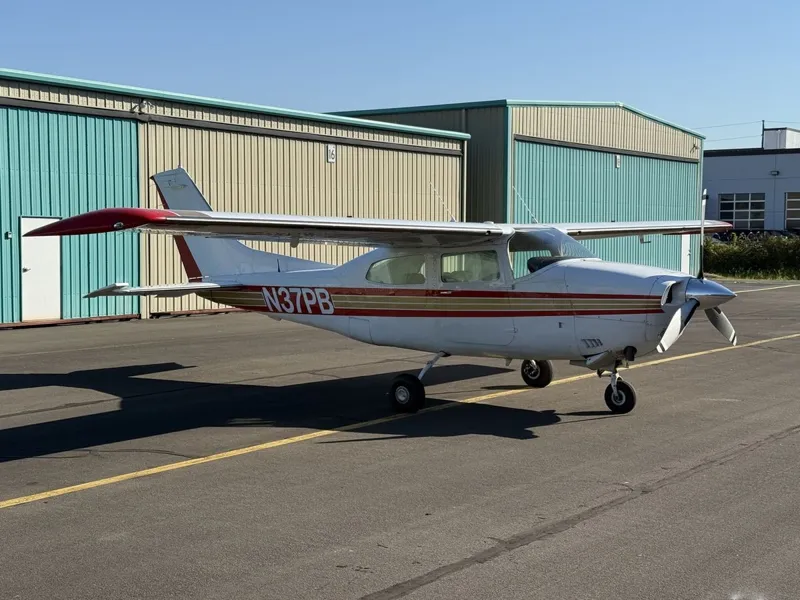
· 6-seat · updated recently
Cessna T210 Specifications
Model specThe Cessna T210 is a 6-seat single engine piston with a cruise speed of 160–215 kt (296–398 km/h), a range of 700–900 nm (1,296–1,667 km), and a useful load of 1,200–1,500 lbs (544–680 kg).
Cessna T210 for Sale
No Cessna T210 currently listed for sale.
This page updates automatically the moment one is listed — check back soon, or browse the Cessna range.
Cessna T210 Variants
| Variant | Years | Seats | Cruise | Range | Useful load | Price range | Best for | Listings for sale |
|---|---|---|---|---|---|---|---|---|
| 210 | 1960–1986 | 6 | 160 kts (296 km/h) | 700 nm (1,296 km) | 1,310 lbs (594 kg) | $65K – $356K | Choose the standard 210 for the fastest six-seat normally aspirated single at the lowest entry price. Choose the T210 turbo for high-altitude and high-density-altitude performance. Choose the P210 for a pressurized cabin — a rare feature in a single-engine piston — for comfortable high-altitude flight. | 188 |
| 210B | 1961–1963 | 4 | 160 kts (296 km/h) | 700 nm (1,296 km) | 1,310 lbs (594 kg) | $79K – $140K | An early-1960s Centurion — a retractable-gear high-wing single at the affordable end of the 210 range. | 5 |
| 210C | 1964–1965 | 4 | 160 kts (296 km/h) | 700 nm (1,296 km) | 1,310 lbs (594 kg) | $69K – $150K | An early-1960s Centurion — a retractable-gear high-wing single at the affordable end of the 210 range. | 5 |
| T210L | 1972–1976 | 6 | 190 kts (352 km/h) | 900 nm (1,667 km) | 1,310 lbs (594 kg) | $179K – $315K | A 1970s Turbo Centurion — a fast, six-seat retractable single for high-altitude cross-country travel at a more affordable point in the 210 range. | 13 |
| 210L | 1972–1976 | 6 | 164 kts (304 km/h) | 900 nm (1,667 km) | 1,310 lbs (594 kg) | — | A 1970s six-seat retractable Centurion — a fast, capable high-wing single at a more affordable point in the 210 range. | 1 |
| T210M | 1977–1978 | 6 | 193 kts (357 km/h) | 900 nm (1,667 km) | 1,500 lbs (680 kg) | $199K – $596K | A mid-1970s Turbo Centurion — a fast, six-seat retractable single for high-altitude cross-country travel. | 10 |
| 210M | 1977–1979 | 6 | 164 kts (304 km/h) | 900 nm (1,667 km) | 1,310 lbs (594 kg) | $149K – $339K | A mid-1970s six-seat retractable Centurion — a fast, capable high-wing single for cross-country travel. | 4 |
| P210 | 1978–1986 | 6 | 180 kts (333 km/h) | 850 nm (1,574 km) | 1,200 lbs (544 kg) | $180K – $420K | A pressurised Centurion — a fast pressurised single-engine piston for high-altitude, owner-flown travel above most weather. | 12 |
| P210 Silver Eagle | 1978–1985 | 6 | 215 kts (398 km/h) | 900 nm (1,667 km) | 1,300 lbs (590 kg) | $695K – $975K | Choose the P210 Silver Eagle for pressurized, turbine-single reliability and altitude at far lower cost than a factory turboprop single. | 10 |
| P210N | 1978–1983 | 6 | 198 kts (367 km/h) | 850 nm (1,574 km) | 1,200 lbs (544 kg) | $149K – $695K | The pressurised, normally aspirated-cabin Centurion of the late 1970s and 1980s — a fast pressurised single for high-altitude, owner-flown travel. | 29 |
| T210N | 1979–1986 | 6 | 193 kts (357 km/h) | 900 nm (1,667 km) | 1,310 lbs (594 kg) | $249K – $415K | The turbocharged Centurion of the late 1970s and 1980s — a fast, six-seat retractable single for high-altitude cross-country travel. | 21 |
| 210N | 1979–1986 | 6 | 164 kts (304 km/h) | 900 nm (1,667 km) | 1,310 lbs (594 kg) | $200K – $360K | A late six-seat retractable Centurion — a fast, capable high-wing single for cross-country travel. | 3 |
| P210R | 1982–1986 | 6 | 213 kts (394 km/h) | 900 nm (1,667 km) | 1,200 lbs (544 kg) | $425K – $530K | The final, most-refined pressurised Centurion — a fast pressurised single for high-altitude owner-flown travel. | 3 |
Compare Cessna T210
Detailed comparisons for the Cessna T210 are being prepared.
Browse all Cessna models →Cessna T210 Price & Cost
Key price factors: engine time to overhaul, year and airframe hours, avionics, damage history and logbook completeness — see the buying guide below for the full pre-purchase checklist.
The turbocharged T210 costs more to operate than a normally aspirated Centurion: the TSIO-520 burns in the high teens of gph and adds turbocharger and exhaust maintenance, and turbocharged engines demand careful temperature management to reach TBO. The hydraulic retractable gear remains a recurring item. Buy on turbo-system and cylinder/CHT history as much as time-since-overhaul; a well-managed T210 turbo system is reliable, but neglected turbo, exhaust, or overheated cylinders can be a large and recurring expense.
Buying a Used Cessna T210
Buying a Cessna T210 comes down to a focused pre-purchase checklist — here is what matters most on this model:
What to check before buying
Frequently Asked Questions — Cessna T210
About the Cessna Turbo 210 (T210) series
T210 vs naturally aspirated 210 — who needs the turbo?
T210 vs P210 Pressurized Centurion — when does pressurization justify the cost?
Which T210 variant should I buy?
What to inspect on a used T210?
Cessna T210 Inventory by Country
| United States | 5 |
| Canada | 1 |
| United Kingdom | 1 |
Cessna T210 Inventory by State
| California | 26 |
| Texas | 17 |
| Oklahoma | 15 |
| Florida | 12 |
| Arizona | 6 |
| Nevada | 5 |
| Illinois | 4 |
| Wyoming | 3 |
| Indiana | 3 |
| Louisiana | 3 |
| Minnesota | 3 |
| Montana | 3 |
Cessna T210 by Price
| Under $100k | 15 |
| Under $200k | 51 |
| Under $300k | 103 |
| Under $500k | 135 |
Other Cessna Aircraft
| Cessna Citation III / VII | 26 |
| Cessna Citation II | 21 |
| Cessna Citation I | 11 |
| Cessna Caravan | 8 |
Cessna T210 Safety Record
Across all T210 variants, 792 NTSB-recorded events are on file from 1982–2025. As with any aircraft, most outcomes depend on pilot training, maintenance and operating conditions rather than the airframe itself.
792
Total Events
358
Incidents
89
Serious
192
Fatal
Most Recent Events
| Date | Location | Severity | Probable Cause |
|---|---|---|---|
| Jul 21, 2025 | Crosby, TX | Incident | — |
| May 29, 2025 | Tucson Estates, AZ | Incident | The pilot’s improper landing flare, which resulted in a hard landing. |
| Apr 22, 2025 | Fayetteville, AR | Incident | — |
| Mar 22, 2025 | El Perico, | Incident | — |
| Feb 16, 2025 | Flagstaff, AZ | Incident | — |
NTSB records 1982–2025. Includes all Cessna T210 variants. Events ≠ aircraft fault.