
Cessna T207 Aircraft in Arizona
Arizona is favoured for aircraft long-term storage and preservation due to its dry desert climate. Major aviation infrastructure in Phoenix, Tucson, Prescott. The state hosts significant aircraft boneyards (Davis-Monthan) and a strong aircraft restoration/refurbishment industry. Phoenix is a major aircraft transaction hub.
The Cessna T207 is the turbocharged version of the stretched 207 Stationair — a high-wing single-engine utility aircraft seating seven to eight, with a turbocharged engine for high-altitude and high-elevation performance. It combines the 207's maximum cabin and payload with turbo capability, making it a capable commuter and cargo hauler. See the live price range and median above for the Cessna T207 Stationair listings currently on the market.
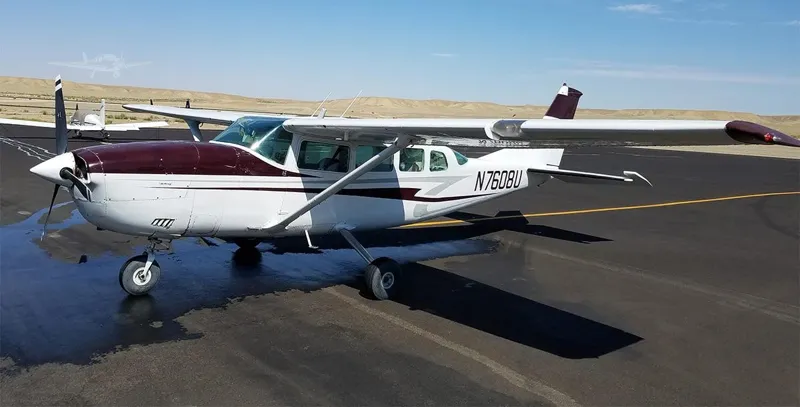
· 7-seat · Reference price ~$350,000 ($220,000–$600,000) · updated recently
Cessna T207 Specifications
Model specThe Cessna T207 is a 7-seat single engine piston with a cruise speed of 137–150 kt (254–278 km/h), a range of 650–840 nm (1,204–1,556 km), and a useful load of 1,296–1,700 lbs (588–771 kg).
Cessna T207 for Sale
No Cessna T207 currently listed for sale.
This page updates automatically the moment one is listed — check back soon, or browse the Cessna range.
Cessna T207 Variants
| Variant | Years | Seats | Cruise | Range | Useful load | Price range | Best for | Listings for sale |
|---|---|---|---|---|---|---|---|---|
| 205 | 1963–1964 | 6 | 140 kts (259 km/h) | 700 nm (1,296 km) | 1,400 lbs (635 kg) | $139K – $189K | The fixed-gear forerunner of the Stationair — an early six-seat high-wing utility single for load-hauling and family transport. | 5 |
| 206 | 1964–1986 | 6 | 142 kts (263 km/h) | 840 nm (1,556 km) | 1,400 lbs (635 kg) | $131K – $403K | Choose the 206 / U206 for the classic six-seat utility hauler with double cargo doors — the default Stationair. Choose the T206 / TU206 turbo for high-altitude or high-density-altitude operations. Choose the 207 if you need maximum seats and cabin length and can accept slightly lower performance. | 14 |
| P206 | 1965–1973 | 6 | 142 kts (263 km/h) | 840 nm (1,556 km) | 1,400 lbs (635 kg) | $189K – $240K | A pressurised-era utility Stationair — a six-seat high-wing hauler for utility, cargo and family transport. | 5 |
| 207 | 1969–1984 | 6 | 137 kts (254 km/h) | 650 nm (1,204 km) | 1,700 lbs (771 kg) | — | The stretched seven-to-eight-seat Stationair — a high-wing utility single for maximum cabin and payload in commuter and cargo roles. | 3 |
| TU206 | 1977–1986 | 6 | 148 kts (274 km/h) | 800 nm (1,482 km) | 1,340 lbs (608 kg) | $223K – $649K | A turbocharged utility Stationair — a six-seat high-wing hauler with high-altitude performance for bush, cargo and float work. | 4 |
| U206F | 1977–1986 | 5 | 142 kts (263 km/h) | 760 nm (1,408 km) | 1,296 lbs (588 kg) | $159K – $250K | Choose the U206F Stationair for rugged six-seat fixed-gear utility - cargo, skydiving, bush or float - with wide parts support. | 5 |
| U206G | 1977–1986 | 6 | 142 kts (263 km/h) | 840 nm (1,556 km) | 1,400 lbs (635 kg) | $345K – $445K | A late utility Stationair — a six-seat high-wing hauler with double cargo doors for bush, cargo and skydiving work. | 4 |
| T206 | 1998–2014 | 6 | 148 kts (274 km/h) | 800 nm (1,482 km) | 1,340 lbs (608 kg) | $518K – $646K | A turbocharged Stationair — a six-seat high-wing utility hauler with high-altitude performance for bush, cargo and float work. | 5 |
| T206H | 1998–2014 | 6 | 148 kts (274 km/h) | 800 nm (1,482 km) | 1,340 lbs (608 kg) | $158K – $1.1M | The newest, turbocharged Stationair — for a buyer who wants a current-production six-seat utility single with high-altitude performance and float capability. | 42 |
| 206H | 1998–2014 | 6 | 142 kts (263 km/h) | 840 nm (1,556 km) | 1,400 lbs (635 kg) | $320K – $979K | The current-production normally aspirated Stationair — a new six-seat high-wing utility single for load-hauling and float work. | 17 |
Compare Cessna T207
Detailed comparisons for the Cessna T207 are being prepared.
Browse all Cessna models →Cessna T207 Price & Cost
Key price factors: engine time to overhaul, year and airframe hours, avionics, damage history and logbook completeness — see the buying guide below for the full pre-purchase checklist.
The T207's turbocharged Continental TSIO-520 adds turbocharger, exhaust, and intercooler upkeep on top of the 207's utility-aircraft costs - budget the turbo inspection as a recurring item. Fuel burn runs somewhat higher than the normally aspirated 207. Cargo and mission wear, corrosion, and engine condition remain the primary pre-buy cost variables; the turbo earns its cost only where high-altitude or hot-and-high performance is needed.
Cessna T207 Value by Model Year
Median asking price by year of manufacture. Newer airframes command a premium; value falls with age then plateaus on older models.
Lowest around $389,000 (1999 models) · highest around $895,000 (2022). Bars scaled across the range to show the depreciation curve; hover for exact medians.
Buying a Used Cessna T207
Buying a Cessna T207 comes down to a focused pre-purchase checklist — here is what matters most on this model:
What to check before buying
Frequently Asked Questions — Cessna T207
What is the Cessna T207?
What is the difference between the 207 and T207?
How much does a Cessna T207 cost?
How many seats does a Cessna T207 have?
What is the Cessna T207 used for?
What engine does the Cessna T207 use?
Is the Cessna T207 still in production?
Cessna T207 Inventory by Country
| United States | 2 |
| Australia | 1 |
| Canada | 1 |
| France | 1 |
Cessna T207 Inventory by State
| Texas | 29 |
| Florida | 16 |
| California | 9 |
| Oregon | 4 |
| Ohio | 4 |
| South Carolina | 4 |
| Arkansas | 4 |
| Idaho | 4 |
| Alaska | 3 |
| Arizona | 3 |
| Georgia | 3 |
| Missouri | 3 |
Cessna T207 by Price
| Under $100k | 1 |
| Under $200k | 20 |
| Under $300k | 40 |
| Under $500k | 74 |
Other Cessna Aircraft
| Cessna Citation III / VII | 26 |
| Cessna Citation II | 21 |
| Cessna Citation I | 11 |
| Cessna Caravan | 8 |
Cessna T207 Safety Record
Across all T207 variants, 52 NTSB-recorded events are on file from 1982–2025. As with any aircraft, most outcomes depend on pilot training, maintenance and operating conditions rather than the airframe itself.
52
Total Events
20
Incidents
7
Serious
15
Fatal
Most Recent Events
| Date | Location | Severity | Probable Cause |
|---|---|---|---|
| Apr 28, 2025 | Nanwalek, AK | Fatal (2) | — |
| Feb 07, 2025 | Tusayan, AZ | Incident | An encounter with wind gusts, which resulted in a loss of control and a collapse of the nose landing gear. |
| Aug 13, 2022 | Page, AZ | Fatal (2) | The total loss of engine power for undetermined reasons during low altitude cruise flight, which resulted in a water dit… |
| Feb 07, 2022 | Crane Island, WA | Incident | The pilot’s failure to obtain a proper touch down location on a wet grass runway, resulting in a runway overrun and impa… |
| Nov 15, 2017 | Rock Springs, WY | Serious | The pilot's improper in-flight fuel management and reliance on a faulty fuel gauge, which resulted in fuel starvation du… |
NTSB records 1982–2025. Includes all Cessna T207 variants. Events ≠ aircraft fault.