
Cessna 172R Aircraft in Kentucky
✈ The 172R marked Cessna's return to Skyhawk production in 1996 and was the first 172 with a factory fuel-injected engine — the Lycoming IO-360-L2A (160 hp) — replacing the carburetted O-320 of the classic line. Fuel injection removes carburettor-icing risk; the later 172S uses the same engine rated to 180 hp.
The Cessna 172R is a current-generation member of the 172 Skyhawk family — the fuel-injected model that reintroduced the Skyhawk to production in 1996, with a Lycoming IO-360 engine and a four-seat high-wing layout. It sits just below the higher-powered 172S in the modern Skyhawk line and shares the type's stable, forgiving handling and ubiquitous support. See the live price range and median above for the Cessna 172R listings currently on the market.
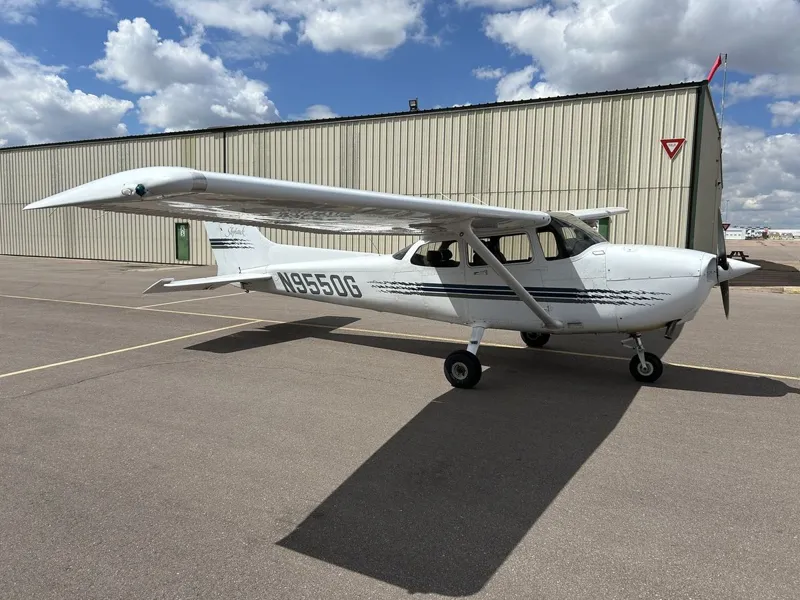
· 4-seat · Used median asking $210,000 · updated recently
Cessna 172R Specifications
Model specThe Cessna 172R is a 4-seat single engine piston with a cruise speed of 114–140 kt (211–259 km/h), a range of 518–720 nm (959–1,333 km), and a useful load of 850–1,010 lbs (386–458 kg).
Cessna 172R for Sale
Cessna 172R asking prices range from $169,950 to $240,000, with a median of $210,000.
No Cessna 172R currently listed for sale.
This page updates automatically the moment one is listed — check back soon, or browse the Cessna range.
Cessna 172R Variants
| Variant | Years | Seats | Cruise | Range | Useful load | Price range | Best for | Listings for sale |
|---|---|---|---|---|---|---|---|---|
| 172 | 1956–now | 4 | 118 kts (219 km/h) | 518 nm (959 km) | 878 lbs (398 kg) | $18K – $395K | Choose the fixed-gear 172 for the most affordable, best-supported and easiest-to-insure four-seat single — the standard trainer and touring aircraft worldwide. Choose the 172RG Cutlass for retractable-gear speed and complex-aircraft time-building. Choose the R172 Hawk XP for extra power and useful load over the standard 172. | 15 |
| 172G | 1966–1966 | 4 | 114 kts (211 km/h) | 575 nm (1,065 km) | 850 lbs (386 kg) | — | Choose the 172G for the lowest-cost entry into the Skyhawk family, accepting the O-300's narrower support for classic character. | 3 |
| 172K | 1969–1971 | 4 | 115 kts (213 km/h) | 580 nm (1,074 km) | 850 lbs (386 kg) | $62K – $204K | Choose the 172K for an affordable early Lycoming Skyhawk with the clean O-320-E2D engine and the large 172 support network. | 14 |
| 172L | 1971–1972 | 4 | 122 kts (226 km/h) | 640 nm (1,185 km) | 878 lbs (398 kg) | $79K – $179K | An early-1970s Skyhawk — an affordable, well-supported four-seat high-wing trainer and tourer. | 11 |
| 172M | 1973–1976 | 4 | 122 kts (226 km/h) | 580 nm (1,074 km) | 900 lbs (408 kg) | — | Choose the 172M for a clean O-320-E2D Skyhawk without the 172N's early-engine AD complications, at lower cost than the youngest 172P. | 3 |
| 172N | 1976–1980 | 4 | 122 kts (226 km/h) | 640 nm (1,185 km) | 878 lbs (398 kg) | — | A late-1970s Skyhawk — a high-volume, low-cost four-seat trainer and tourer that is one of the most common used 172s. | 1 |
| R172 Hawk XP | 1977–1983 | 4 | 129 kts (239 km/h) | 569 nm (1,054 km) | 1,010 lbs (458 kg) | $93K – $255K | Buy the R172 Hawk XP if you want a Skyhawk with real muscle — 195 hp for stronger climb, short-field and float performance than any standard 172. Consider a standard 172 for the lowest running cost and the deepest support network, or a 182 if you need four full seats with baggage. | 26 |
| 172RG | 1980–1985 | 4 | 140 kts (259 km/h) | 720 nm (1,333 km) | 950 lbs (431 kg) | $55K – $222K | Buy the 172RG Cutlass if you want an affordable complex single for the retractable and complex endorsement or for time-building. Consider a fixed-gear 172 if you want the lowest maintenance and insurance, or a 182 if straightforward cross-country hauling matters more than complex-aircraft experience. | 28 |
| 172P | 1981–1985 | 4 | 122 kts (226 km/h) | 640 nm (1,185 km) | 878 lbs (398 kg) | $102K – $324K | A common early-1980s Skyhawk — a low-cost, well-supported four-seat high-wing trainer and tourer. | 15 |
| 172S | 1998–now | 4 | 124 kts (230 km/h) | 518 nm (959 km) | 878 lbs (398 kg) | $207K – $539K | The current-production, fuel-injected Skyhawk — the newest four-seat high-wing trainer to buy if you want a glass-panel, in-production 172. | 25 |
Compare Cessna 172R
Detailed comparisons for the Cessna 172R are being prepared.
Browse all Cessna models →Cessna 172R Price & Cost
How much does a Cessna 172R cost? Used 172R prices: $169K – $240K, average $210K (median $210K), across 10 priced of 0 active listings.
Key price factors: engine time to overhaul, year and airframe hours, avionics, damage history and logbook completeness — see the buying guide below for the full pre-purchase checklist.
The 172R's IO-360-L2A is derated, giving it a conservative operating environment and long TBO. Fuel costs at 8-8.5 gph are comparable to the classic O-320 Skyhawks. The modern airframe means fewer age-related corrosion and hose-replacement items than a 1970s classic 172, though the 172R is now entering the range where airframe maintenance items begin to appear. Annual inspection costs are consistent with the broader 172 fleet. The absence of a carburetor removes one maintenance and preflight item relative to the classic O-320 variants.
Cessna 172R Value by Model Year
Median asking price by year of manufacture. Newer airframes command a premium; value falls with age then plateaus on older models.
Lowest around $188,475 (1999 models) · highest around $589,500 (2019). Bars scaled across the range to show the depreciation curve; hover for exact medians.
Buying a Used Cessna 172R
Buying a Cessna 172R comes down to a focused pre-purchase checklist — here is what matters most on this model:
What to check before buying
Frequently Asked Questions — Cessna 172R
About the Cessna 172R
What makes the 172R different from the pre-halt 172P?
172R vs 172S — which restart Skyhawk should I buy?
What should I inspect on a used 172R?
Is the 172R a good first aircraft?
Cessna 172R Inventory by State
| California | 54 |
| Florida | 34 |
| Texas | 20 |
| South Carolina | 18 |
| North Carolina | 14 |
| Kentucky | 12 |
| Colorado | 10 |
| New York | 10 |
| Georgia | 10 |
| Washington | 10 |
| Arizona | 9 |
| Idaho | 8 |
Cessna 172R by Price
| Under $100k | 131 |
| Under $200k | 360 |
| Under $300k | 403 |
| Under $500k | 420 |
Other Cessna Aircraft
| Cessna Citation III / VII | 26 |
| Cessna Citation II | 21 |
| Cessna Citation I | 12 |
| Cessna Caravan | 8 |
Cessna 172R Safety Record
Across all 172R variants, 422 NTSB-recorded events are on file from 1982–2026. As with any aircraft, most outcomes depend on pilot training, maintenance and operating conditions rather than the airframe itself.
422
Total Events
299
Incidents
21
Serious
64
Fatal
Most Recent Events
| Date | Location | Severity | Probable Cause |
|---|---|---|---|
| Feb 01, 2026 | Hollywood, FL | Incident | — |
| Oct 28, 2025 | Boca Raton, FL | Incident | The low-wing pilot’s inadequate visual lookout, which resulted in a collision with another airplane while taxiing. |
| Aug 28, 2025 | Ardmore, OK | Incident | The pilot’s improper landing flare, which resulted in a hard, bounced landing. |
| Apr 23, 2025 | Louisburg, NC | Incident | — |
| Oct 06, 2024 | Ejido de Treinta y Tres, | Incident | — |
NTSB records 1982–2026. Includes all Cessna 172R variants. Events ≠ aircraft fault.