
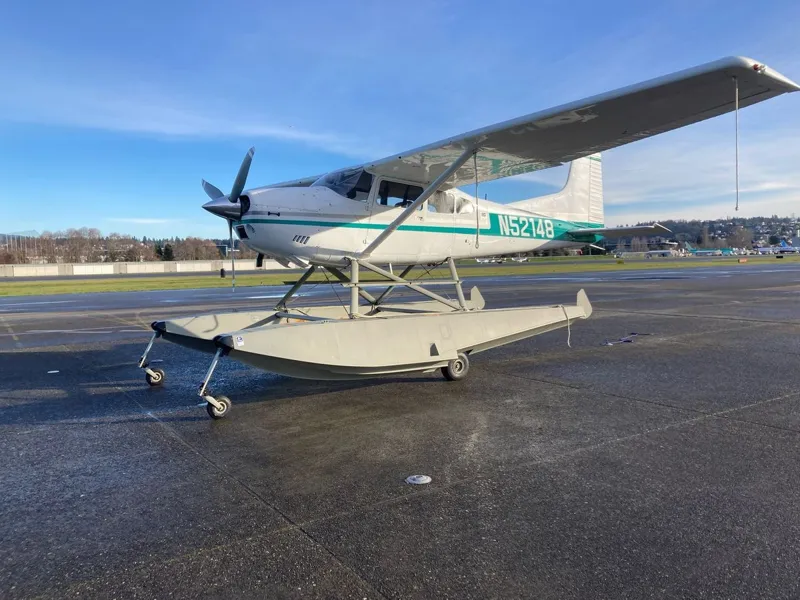
1974 Cessna 180 SKYWAGON
Single Engine Piston
FOR SALE
$325,000
Location
Kirkland, WA
Total Time
7,780 hrs
Engine SMOH
1,600 hrs
Seats
4
Engine
CONTINENTAL O-470-K
Cruise
140 kts (259 km/h)
ICAO Type
C180
⚠ NTSB
⚠ High time
Listing Details
Seller reported- Year
- 1974
- Make
- Cessna
- Model
- 180 SKYWAGON
- Total Time
- 7,780 hr
- Location
- Kirkland, WA
- Seller
- Hangar Gurus
- Source
- trade-a-plane.com
C180J on Wipaire amphis, TT 7781.1 approx, IO-550-DCO ESFRM 1597.5 ESTOH approx, Garmin 750
Cessna 180 SKYWAGON — Model Specs
Model specificationStandard specs for this model. Actual aircraft may differ.
Seats
4
Cruise Speed
140 kts (259 km/h)
Max Speed
155 kts (287 km/h)
Range
700 nm (1,296 km)
Ceiling
20,000 ft (6,096 m)
Max Weight
2,650 lbs (1,202 kg)
Useful Load
1,400 lbs (635 kg)
Horsepower
230 HP
Fuel Capacity
60 gal (227 L)
Fuel Burn
12 GPH (45 L/h)
TBO
1,700 hrs
Estimated Cost of Ownership
AeroGurus estimateFuel Burn
12.0 GPH
~$78/hr
Variable Cost
$155/hr
fuel + mx + reserves
Annual Fixed
$18,000/yr
hangar + insurance + annual
Engine Overhaul
$30,000
every 1,700 hrs
AeroGurus estimates based on industry averages for the . Actual costs vary by location, usage, maintenance history, and configuration. Not a financial quote.
Estimate Monthly Payment
Cessna 180 SKYWAGON loan calculator
Market price band
Cessna 180 SKYWAGON typical:
$115,000 – $314,900
median $180,000
across 38 active listings
This listing at $325,000 is 81% above median.
Other Single Engine Piston aircraft for sale
About the Cessna 180 SKYWAGON
The Cessna 180 Skywagon is the original taildragger utility single — produced 1953-1981 with a Continental O-470 (225 hp) and a strong reputation as one of the best backcountry, float and ski aircraft ever built. Six-seat configurations were available later, and the 180 became a fixture of bush flying in Alaska, Canada and remote operations worldwide. Cruise around 145 knots; useful load comfortable for four adults plus gear.
Produced 1953–1981.