
Cessna T310 Aircraft
The Cessna T310 is the turbocharged variant of the Cessna 310, a six-seat twin-engine piston aircraft. Burning approximately 28 gallons per hour total, the T310 adds altitude performance for mountain and high-altitude operations while retaining the classic 310s speed and carrying capacity.
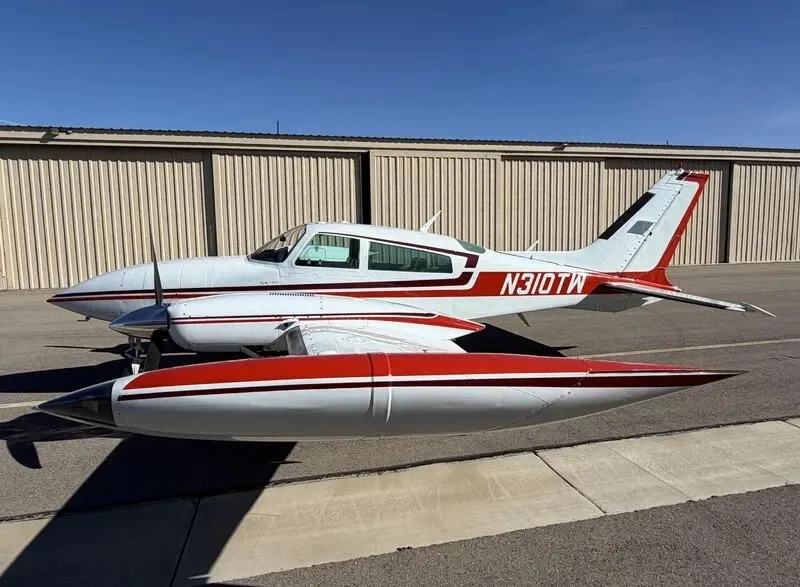
1 used Cessna T310 aircraft for sale · 6-seat · Reference price ~$180,000 ($100,000–$320,000) · updated yesterday
Cessna T310 Specifications
Model specThe Cessna T310 is a 6-seat multi engine piston with a cruise speed of 185–220 kt (343–407 km/h), a range of 800–1,000 nm (1,482–1,852 km), and a useful load of 1,700–1,900 lbs (771–862 kg).
Cessna T310 for Sale
Cessna T310 asking prices range from $249,000 to $249,000, with a median of $249,000 (market reference $180,000).
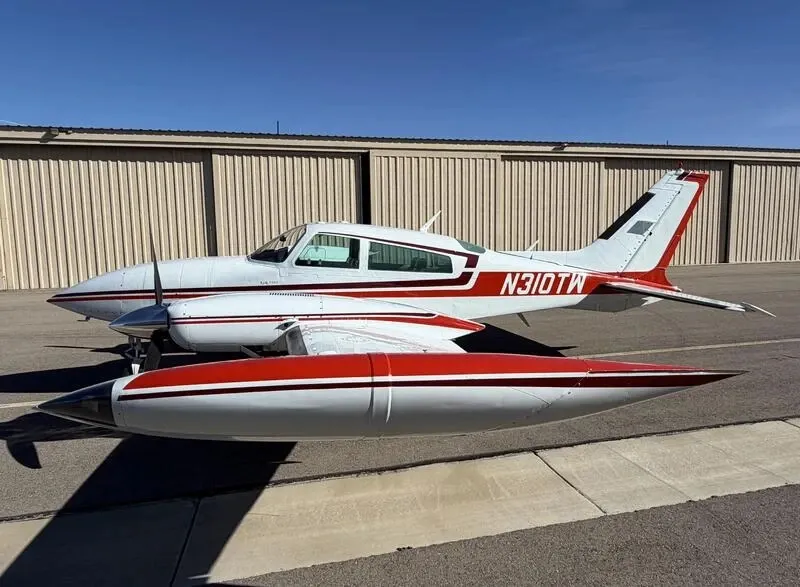
Cessna T310 Variants
| Variant | Years | Seats | Cruise | Range | Useful load | Price range | Best for | Listings for sale |
|---|---|---|---|---|---|---|---|---|
| 310 | 1956–1982 | 5 | 190 kts (352 km/h) | 800 nm (1,482 km) | 1,700 lbs (771 kg) | $84K – $229K | Choose the normally aspirated 310 for the most affordable entry into a fast, classic light twin — a late 310R is the most refined and capable. Choose the T310 turbo for high-altitude and high-density-altitude performance, at higher maintenance cost. | 12 |
| 310F | 1961–1962 | 5 | 185 kts (343 km/h) | 800 nm (1,482 km) | 1,700 lbs (771 kg) | — | An early-1960s Cessna light twin — a fast four-to-six-seat aircraft with classic wing-tip tanks at the affordable end of the 310 range. | 3 |
| 310J | 1963–1965 | 6 | 190 kts (352 km/h) | 800 nm (1,482 km) | 1,700 lbs (771 kg) | — | A mid-1960s Cessna light twin — a fast four-to-six-seat aircraft with classic wing-tip tanks at the affordable end of the 310 range. | 1 |
| 310L | 1966–1967 | 6 | 193 kts (357 km/h) | 800 nm (1,482 km) | 1,700 lbs (771 kg) | $132K – $189K | A mid-1960s Cessna light twin — a fast four-to-six-seat aircraft with classic wing-tip tanks at the affordable end of the 310 range. | 4 |
| 310Q | 1970–1975 | 6 | 195 kts (361 km/h) | 900 nm (1,667 km) | 1,800 lbs (816 kg) | $79K – $194K | An early-1970s Cessna light twin — a fast four-to-six-seat aircraft with classic wing-tip tanks at a mid-range point in the 310 line. | 5 |
| T310R | 1975–1981 | 6 | 220 kts (407 km/h) | 1,000 nm (1,852 km) | 1,900 lbs (862 kg) | $175K – $250K | The turbocharged, most-refined Cessna 310 — a fast six-seat light twin with high-altitude performance for capable cross-country travel. | 6 |
| 310R | 1975–1980 | 6 | 195 kts (361 km/h) | 900 nm (1,667 km) | 1,900 lbs (862 kg) | $90K – $270K | The final, most-refined Cessna 310 — a fast, six-seat light twin with the longest nose and most useful load of the line. | 6 |
Compare Cessna T310
Detailed comparisons for the Cessna T310 are being prepared.
Browse all Cessna models →Cessna T310 Price & Cost
How much does a Cessna T310 cost? Used T310 prices: from $249K; market reference $180K, across 1 priced of 1 active listings.
Key price factors: engine time to overhaul, year and airframe hours, avionics, damage history and logbook completeness — see the buying guide below for the full pre-purchase checklist.
Two turbocharged engines at about 285 hp each burn approximately 28-32 gph combined. The annual covers both turbocharged engines, turbocharger systems, and retractable gear. No pressure vessel means the T310's annual is simpler than the 340 at similar turbocharged performance. TSIO-520-class overhaul cost applies. As a vintage aircraft, reconditioning at acquisition may be needed; ongoing costs afterward are predictable.
Buying a Used Cessna T310
Buying a Cessna T310 comes down to a focused pre-purchase checklist — here is what matters most on this model:
What to check before buying
Frequently Asked Questions — Cessna T310
About the Cessna T310
T310 vs standard 310 — when is the turbo worth it?
What are common T310 maintenance issues?
T310 vs Cessna 340 — turbo twin vs pressurized twin
Is the T310 well-supported?
Cessna T310 Inventory by Country
| United States | 1 |
Cessna T310 Inventory by State
| Florida | 11 |
| California | 3 |
| South Carolina | 3 |
| Tennessee | 3 |
| Arizona | 2 |
| Texas | 2 |
| Illinois | 2 |
| Nevada | 2 |
| Pennsylvania | 2 |
Cessna T310 by Price
| Under $100k | 6 |
| Under $200k | 33 |
| Under $300k | 46 |
| Under $500k | 46 |
Cessna T310 by Decade
| 1970s | 1 |
Other Cessna Aircraft
| Cessna Citation III / VII | 26 |
| Cessna Citation II | 21 |
| Cessna Citation I | 12 |
| Cessna Caravan | 8 |
Cessna T310 Safety Record
Across all T310 variants, 56 NTSB-recorded events are on file from 1982–2023. As with any aircraft, most outcomes depend on pilot training, maintenance and operating conditions rather than the airframe itself.
56
Total Events
27
Incidents
5
Serious
20
Fatal
Most Recent Events
| Date | Location | Severity | Probable Cause |
|---|---|---|---|
| Jul 18, 2023 | Santa Fe, NM | Fatal (1) | A total loss of left engine power as a result of improper installation of the aft-facing crankshaft counterweight retain… |
| Jul 24, 2022 | Oshkosh, WI | Incident | The pilot’s loss of control while landing. |
| Nov 22, 2021 | Chadron, NE | Fatal (3) | The incapacitating effects of a myocardial infarction (heart attack), which resulted in the pilot's loss of airplane con… |
| Jan 15, 2020 | Roy, UT | Fatal (1) | The pilot’s inadequate preflight fuel planning and fuel management, which resulted in a total loss of power to the left … |
| Mar 24, 2019 | Philadelphia, PA | Incident | The pilot’s and flight instructor's failure to verify that the landing gear were extended, which resulted in a gear-up l… |
NTSB records 1982–2023. Includes all Cessna T310 variants. Events ≠ aircraft fault.