
Cessna 210 vs Cirrus SR22T
The Cessna 210 Centurion (six-seat retractable, ~180-190 kt) competes against multiple six-seat / high-performance singles — Cirrus SR22T (four-seat turbo, ~213 kt, CAPS), Diamond DA62 (seven-seat twin diesel, ~190 kt), Mooney M20J (four-seat efficient, ~160 kt), Piper Malibu (six-seat pressurised, ~213+ kt), Piper Saratoga (six-seat ~150-165 kt).
Live Market Snapshot
Current asking-price market, aggregated across multiple marketplaces · re-checked on a rolling daily cycle
- For sale now
- 177
- Median asking
- $249,750
- Range
- $90,200–$695,000
- Model years available
- 1960–2021
- For sale now
- 303
- Median asking
- $774,900
- Range
- $349,900–$1,184,900
- Model years available
- 2004–2025
Live data from AeroGurus, aggregated daily across the used-aircraft market. Figures are current asking prices, not appraisals — confirm with a pre-buy inspection.
Generations Breakdown
Per-generation specs — engine/weight/performance differ materially across production eras.
Per-era “For sale” counts exclude listings with unspecified year and separate variants (RG retractable, Hawk XP), so they may not sum to the total above.
Cessna 210 — 4 generations
| Generation | Years | Engine | MTOW | Cruise | Range | For sale |
|---|---|---|---|---|---|---|
| 210 IO-470 (260hp) | 1960–1963 | IO-470-E | 2900 | 160 | 700 | 30 |
| 210 IO-520 (NA) | 1964–1986 | IO-520-A/L | 3800 | 171 | 900 | 51 |
| T210 Turbo | 1966–1986 | TSIO-520-R | 3800 | 193 | 950 | 58 |
| P210 Pressurized | 1978–1986 | TSIO-520-P | 4000 | 200 | 1000 | 58 |
Cirrus SR22T — 0 generations
| Generation | Years | Engine | MTOW | Cruise | Range | For sale |
|---|
Safety Record
Absolute counts scale with fleet size — the most-produced types log more events without being less safe. Compare the % fatal.
| NTSB (1982–now) | Cessna 210 | Cirrus SR22T |
|---|---|---|
| All events | 819 | 1 |
| Serious | 64 | 0 |
| Fatal | 192 | 0 |
| Fatalities | 413 | 0 |
| % Fatal | 23% | 0% |
Full Specs Comparison
| Spec / Model | Cessna 210 | Cirrus SR22T |
|---|---|---|
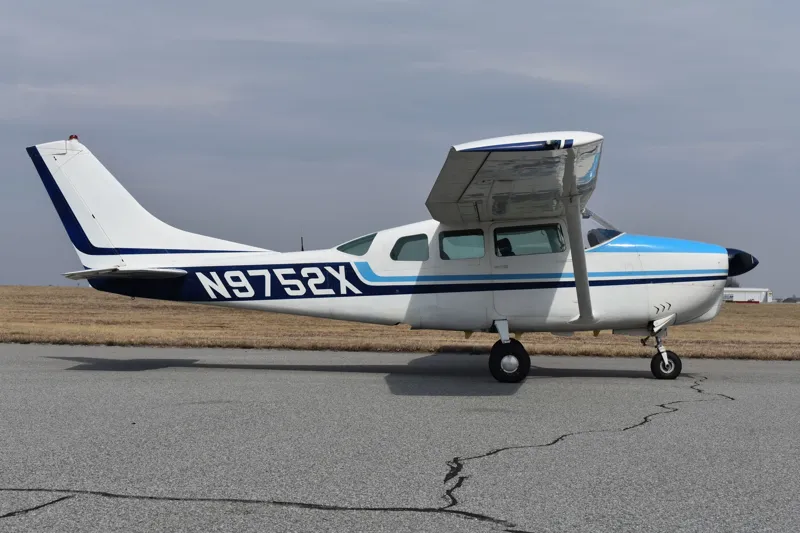
|
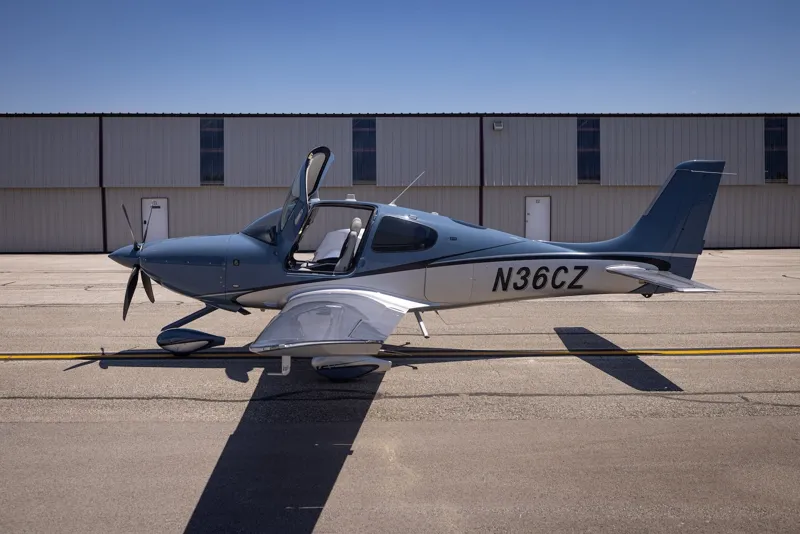
|
|
| Price Range | $90,200 – $695,000 | $349,900 – $1,184,900 |
| Category | Single Engine Piston | Single Engine Piston |
| Model Specifications | ||
| Seats | 6 | 5 |
| Horsepower | 260–325 HP | 315 HP |
| Cruise Speed | 160–200 kts (370 km/h) | 213 kts (394 km/h) |
| Range | 700–1,000 nm (1,852 km) | 1,021 nm (1,891 km) |
| Service Ceiling | 17,300 ft (5,273 m) | 25,000 ft (7,620 m) |
| Max Gross Weight | 2900–4,000 lbs (1,814 kg) | 3,600 lbs (1,633 kg) |
| Useful Load | 1,310 lbs (594 kg) | 1,098 lbs (498 kg) |
| Fuel Capacity | 90.0 gal (341 L) | 92.0 gal (348 L) |
| Fuel Burn | 14.5 GPH (55 L/h) | 16.0 GPH (61 L/h) |
| TBO | 1,700 hrs | 2,000 hrs |
| Overhaul Cost | $35,000 | $40,000 |
| Annual Fixed | $22,000 | $28,000 |
| Hourly Variable | $175 | $210 |
| Engines | 1 x Piston | 1 x Piston (Turbocharged) |
Cost of Ownership
EstimateCessna 210
Cirrus SR22T
Which Should You Buy: Cessna 210 or Cirrus SR22T?
Bottom line: Choose the 210 for the iconic high-wing six-seat retractable Cessna — the proven high-performance utility-six-seater. The competitors offer specific advantages (CAPS parachute, diesel economics, efficiency, pressurisation) — choose the 210 when you specifically want the high-wing six-seat Cessna character and the broad Cessna support network.
Pick the 210 if…
- Budget matters — from $90,200 vs $349,900, you save ~$259,700.
- Lower operating cost — ~$175/hr vs $210/hr.
- More seats — 6 vs 5.
Pick the SR22T if…
- Faster cruise — 213 kts vs 160 kts.
- Longer range — 1021 nm vs 700 nm.
- Newer design — production from 2010 vs 1960.
- More inventory — 311 listings vs 31.
Auto-generated from current market data and published specs. Confirm with a pre-buy inspection and professional appraisal.