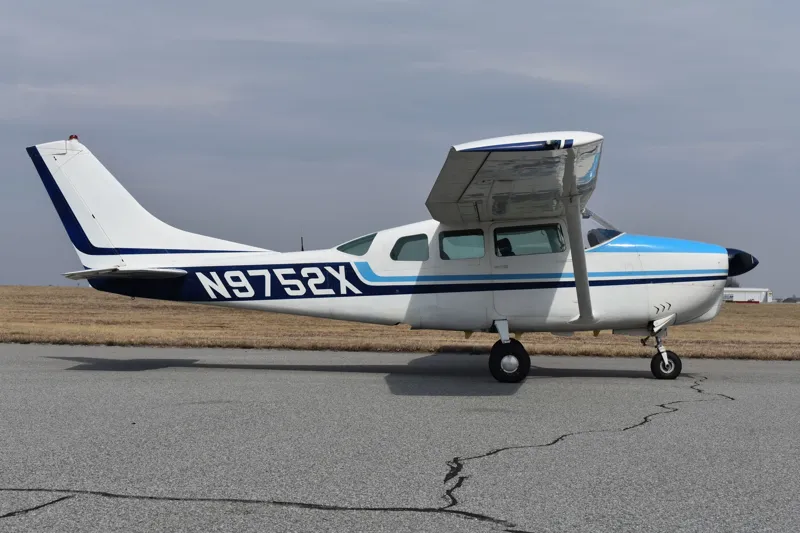
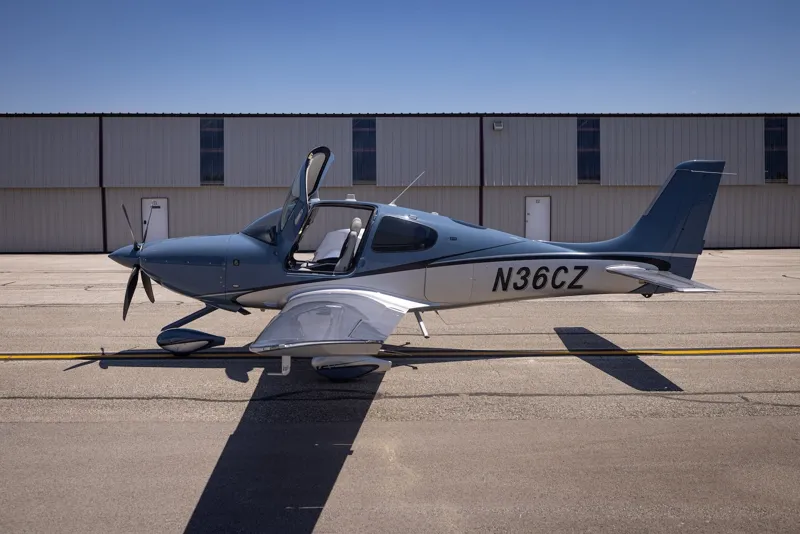
Cessna 210 vs Cirrus SR22T

The Cessna 210 Centurion (six-seat retractable, ~180-190 kt) competes against multiple six-seat / high-performance singles — Cirrus SR22T (four-seat turbo, ~213 kt, CAPS), Diamond DA62 (seven-seat twin diesel, ~190 kt), Mooney M20J (four-seat efficient, ~160 kt), Piper Malibu (six-seat pressurised, ~213+ kt), Piper Saratoga (six-seat ~150-165 kt).

Live Market Snapshot

Current asking-price market, aggregated across multiple marketplaces · re-checked on a rolling daily cycle

Cessna 210
For sale now
177
Median asking
$249,750
Range
$90,200–$695,000
Model years available
1960–2021
Cirrus SR22T
For sale now
303
Median asking
$774,900
Range
$349,900–$1,184,900
Model years available
2004–2025

Live data from AeroGurus, aggregated daily across the used-aircraft market. Figures are current asking prices, not appraisals — confirm with a pre-buy inspection.

Generations Breakdown

Per-generation specs — engine/weight/performance differ materially across production eras.

Per-era “For sale” counts exclude listings with unspecified year and separate variants (RG retractable, Hawk XP), so they may not sum to the total above.

Cessna 210 — 4 generations

GenerationYearsEngineMTOWCruiseRangeFor sale
210 IO-470 (260hp) 1960–1963 IO-470-E 2900 160 700 29
210 IO-520 (NA) 1964–1986 IO-520-A/L 3800 171 900 48
T210 Turbo 1966–1986 TSIO-520-R 3800 193 950 58
P210 Pressurized 1978–1986 TSIO-520-P 4000 200 1000 56

Cirrus SR22T — 0 generations

GenerationYearsEngineMTOWCruiseRangeFor sale

Safety Record

Absolute counts scale with fleet size — the most-produced types log more events without being less safe. Compare the % fatal.

NTSB (1982–now)Cessna 210Cirrus SR22T
All events8191
Serious640
Fatal1920
Fatalities4130
% Fatal23%0%

Full Specs Comparison

Swipe to see all specs
Spec / Model Cessna 210 Cirrus SR22T
Cessna 210
View 28 listings →
Median $249,750
Cirrus SR22T
View 311 listings →
Median $774,900
Price Range $90,200 – $695,000 $349,900 – $1,184,900
Category Single Engine Piston Single Engine Piston
Model Specifications
Seats 6 5
Horsepower 260–325 HP 315 HP
Cruise Speed 160–200 kts (370 km/h) 213 kts (394 km/h)
Range 700–1,000 nm (1,852 km) 1,021 nm (1,891 km)
Service Ceiling 17,300 ft (5,273 m) 25,000 ft (7,620 m)
Max Gross Weight 2900–4,000 lbs (1,814 kg) 3,600 lbs (1,633 kg)
Useful Load 1,310 lbs (594 kg) 1,098 lbs (498 kg)
Fuel Capacity 90.0 gal (341 L) 92.0 gal (348 L)
Fuel Burn 14.5 GPH (55 L/h) 16.0 GPH (61 L/h)
TBO 1,700 hrs 2,000 hrs
Overhaul Cost $35,000 $40,000
Annual Fixed $22,000 $28,000
Hourly Variable $175 $210
Engines 1 x Piston 1 x Piston (Turbocharged)

Cost of Ownership

Estimate

Cessna 210

Fuel$80/hr
Variable$175/hr
Annual Fixed$22,000/yr
Total (200 hrs/yr) $57,000/yr

Cirrus SR22T

Fuel$88/hr
Variable$210/hr
Annual Fixed$28,000/yr
Total (200 hrs/yr) $70,000/yr

Which Should You Buy: Cessna 210 or Cirrus SR22T?

Bottom line: Choose the 210 for the iconic high-wing six-seat retractable Cessna — the proven high-performance utility-six-seater. The competitors offer specific advantages (CAPS parachute, diesel economics, efficiency, pressurisation) — choose the 210 when you specifically want the high-wing six-seat Cessna character and the broad Cessna support network.

Pick the 210 if…

  • Budget matters — from $90,200 vs $349,900, you save ~$259,700.
  • Lower operating cost — ~$175/hr vs $210/hr.
  • More seats — 6 vs 5.

Pick the SR22T if…

  • Faster cruise — 213 kts vs 160 kts.
  • Longer range — 1021 nm vs 700 nm.
  • Newer design — production from 2010 vs 1960.
  • More inventory — 311 listings vs 28.

Auto-generated from current market data and published specs. Confirm with a pre-buy inspection and professional appraisal.

Frequently Asked Questions

What's the key difference between the Cessna 210 and Cirrus SR22T?
Design era, safety system, and seating. The SR22T uses the Continental TSIO-550-K (315 hp) in a modern composite airframe with CAPS (whole-aircraft parachute), cruising approximately 213 kt with four seats plus a fifth. The Cessna 210 is a 1960s–1980s aluminium six-seat aircraft with retractable gear — up to 300 hp in turbocharged variants, approximately 165–200 kt cruise depending on variant. The SR22T is faster and newer; the 210 carries more people.
210 or SR22T — which high-performance single?
Buy the SR22T if maximum speed from a piston single, modern composite construction, the CAPS safety system, and current avionics in a four-seat machine are priorities. Buy the 210 if six seats are genuinely needed — the SR22T effectively carries four; the 210 carries six with meaningful useful load. For a solo pilot or two-person missions the SR22T's speed is compelling; for a family of six or cargo operations, the 210 is the option.
How does the SR22T's CAPS change the safety calculation?
CAPS allows the pilot to deploy an airframe parachute in loss-of-control or engine-failure scenarios — it has been used in multiple real-world saves. The 210 has no such system; outcomes depend on pilot skill and terrain. For owner-pilots who prioritise a safety margin over redundancy, CAPS is a genuine advantage. The 210's six-seat utility remains unmatched in the piston-single category.
How do specs compare?
Cessna 210: Continental IO-520 (NA) or TSIO-520 (turbo), six seats, retractable gear, ~165–200 kt. Cirrus SR22T: Continental TSIO-550-K (~315 hp), four-plus-one seats, fixed gear, ~213 kt, CAPS, composite.
Which is cheaper to operate?
Engine operating costs are broadly comparable at similar power — both use large-displacement Continentals. The SR22T's composite airframe and modern systems require Cirrus-authorised shops; the 210's established support network is broad and competitive. Retractable-gear maintenance adds to the 210's costs. Overall operating costs are in the same range; the SR22T's speed reduces per-nm cost on longer flights.
Which should I buy?
SR22T for four-seat high-performance touring with CAPS, modern avionics, and the fastest piston-single cabin experience. 210 for six-seat payload flexibility where the extra seats are genuinely used. The SR22T has largely taken over the 210's market role for four-person owners; only buyers who consistently fill six seats have a strong reason to choose the 210.
Which is better, Cessna 210 or Cirrus SR22T?
It depends on your mission and budget. The 210 cruises at 160 kts with 700 nm range. The SR22T cruises at 213 kts with 1,021 nm range. Review the specs table above to find which fits your flying profile.
How do prices compare?
Cessna 210: from $159,000. Cirrus SR22T: from $1,249,000. Prices vary by year, hours, avionics, and condition. Always get a pre-buy inspection.
What's the difference between Cessna 210 and Cirrus SR22T?
210 engine: CONTINENTAL IO-470-E (260 hp). SR22T engine: Continental IO-550-N (315 hp). Seats: 6 vs 5. Cruise: 160 vs 213 kts. Range: 700 vs 1021 nm.
Which is cheaper to operate per hour?
210: about $175/hr variable cost. SR22T: about $210/hr variable cost. Variable cost includes fuel, reserves and overhaul accruals. Annual fixed costs (hangar, insurance, annual inspection) add to the total.
Which has more seats and useful load?
210: 6 seats / 1,310 lb useful load. SR22T: 5 seats / 1,098 lb useful load. Useful load = max gross weight minus empty weight; it determines how much fuel plus payload you can carry.
How does maintenance compare — TBO and overhaul cost?
210: 1,700-hour TBO, overhaul ~$35,000. SR22T: 2,000-hour TBO, overhaul ~$40,000. Reaching the time-between-overhaul (TBO) triggers a mandatory engine/airframe rebuild that affects resale value.
Disclaimer: All prices and cost estimates are from third-party sources for informational purposes only. Always obtain professional appraisal and inspection before purchase.
Prices re-checked on a rolling cycle — most within a few days · Data: FAA Registry, NTSB · About our data