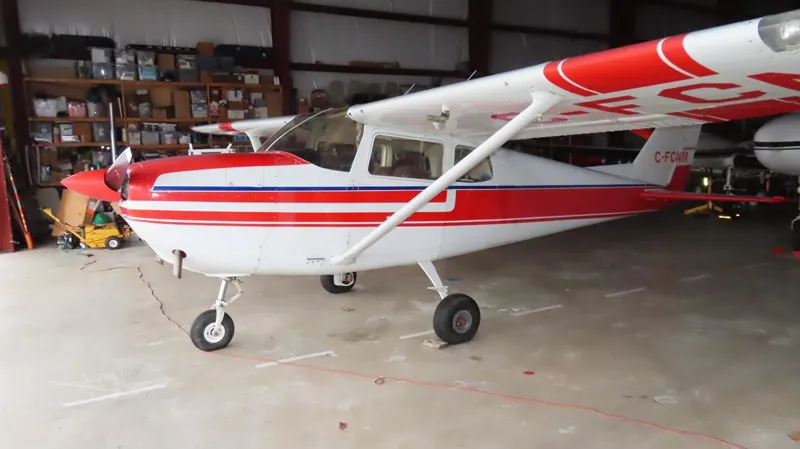
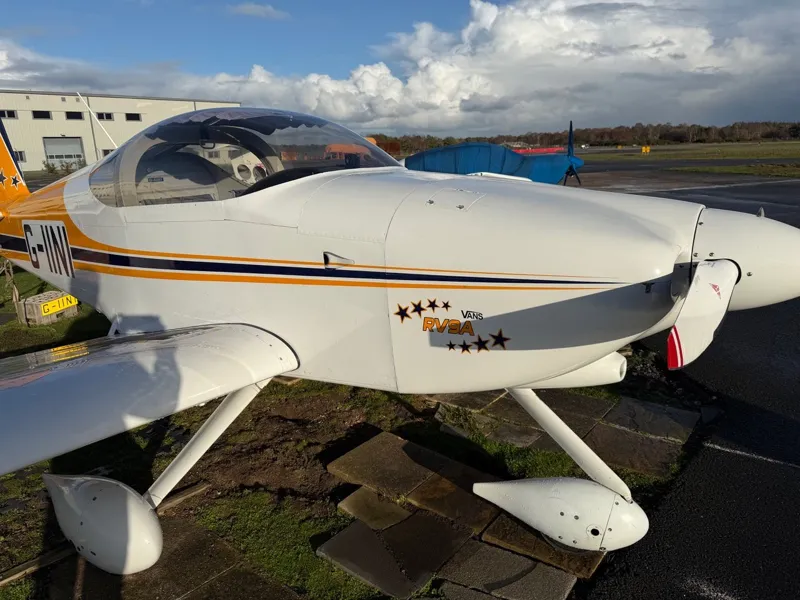
Cessna 172 vs Vans RV-9

The Van's RV-9 (amateur-built efficient two-seat tourer) and Cessna 172 (certified four-seat trainer/tourer) are different categories — the RV-9 is faster and more efficient on less fuel; the 172 is the certified, four-seat, rentable/financeable standard.

Live Market Snapshot

Current asking-price market, aggregated across multiple marketplaces · re-checked on a rolling daily cycle

Cessna 172
For sale now
495
Median asking
$128,000
Range
$56,710–$299,000
Model years available
1951–2026
Vans RV-9
For sale now
3
Model years available
2004–2004

Live data from AeroGurus, aggregated daily across the used-aircraft market. Figures are current asking prices, not appraisals — confirm with a pre-buy inspection.

Generations Breakdown

Per-generation specs — engine/weight/performance differ materially across production eras.

Per-era “For sale” counts exclude listings with unspecified year and separate variants (RG retractable, Hawk XP), so they may not sum to the total above.

Cessna 172 — 3 generations

GenerationYearsEngineMTOWCruiseRangeFor sale
172 Continental 1956–1967 O-300 2300 118 520 135
172 O-320 150hp 1968–1976 O-320-E2D 2300 120 585 119
172 O-320 160hp 1977–1986 O-320-H2AD/D2J 2400 122 585 96

Van's RV-9 — 0 generations

GenerationYearsEngineMTOWCruiseRangeFor sale

Safety Record

Absolute counts scale with fleet size — the most-produced types log more events without being less safe. Compare the % fatal.

NTSB (1982–now)Cessna 172Van's RV-9
All events68101
Serious5420
Fatal9601
Fatalities18021
% Fatal14%100%

Full Specs Comparison

Swipe to see all specs
Spec / Model Cessna 172 Van's RV-9
Cessna 172
View 154 listings →
Median $128,000
Vans RV-9
View 3 listings →
Median $150,000
Price Range $56,710 – $299,000 $140,054 – $193,650
Category Single Engine Piston Experimental
Model Specifications
Seats 4 2
Horsepower 145–160 HP 160 HP
Cruise Speed 118–122 kts (226 km/h) 160 kts (296 km/h)
Range 520–585 nm (1,083 km) 700 nm (1,296 km)
Service Ceiling 14,000 ft (4,267 m) 18,000 ft (5,486 m)
Max Gross Weight 2300–2,400 lbs (1,089 kg)
Useful Load 878 lbs (398 kg) 650 lbs (295 kg)
Fuel Capacity 56.0 gal (212 L)
Fuel Burn 8.6 GPH (33 L/h) 6.0 GPH (23 L/h)
TBO 1,400 hrs 2,000 hrs
Overhaul Cost $30,000 $20,000
Annual Fixed $18,000 $10,000
Hourly Variable $130 $85
Engines 1 x Piston 1 x Piston

Cost of Ownership

Estimate

Cessna 172

Fuel$47/hr
Variable$130/hr
Annual Fixed$18,000/yr
Total (200 hrs/yr) $44,000/yr

Van's RV-9

Fuel$33/hr
Variable$85/hr
Annual Fixed$10,000/yr
Total (200 hrs/yr) $27,000/yr

Which Should You Buy: Cessna 172 or Van's RV-9?

Bottom line: Choose the Cessna 172 for certified four-seat utility, easy financing/insurance and a vast support network. Choose the RV-9 for far better speed and efficiency in a two-seat homebuilt — accepting amateur-built status and the need to assess build quality.

Pick the 172 if…

  • Budget matters — from $56,710 vs $140,054, you save ~$83,344.
  • More seats — 4 vs 2.
  • More inventory — 154 listings vs 3.

Pick the RV-9 if…

  • Lower operating cost — ~$85/hr vs $130/hr.
  • Faster cruise — 160 kts vs 118 kts.
  • Longer range — 700 nm vs 518 nm.
  • Newer design — production from 1997 vs 1956.

Auto-generated from current market data and published specs. Confirm with a pre-buy inspection and professional appraisal.

Frequently Asked Questions

What's the key difference between the Cessna 172 and Vans RV-9?
Certified vs experimental. The Cessna 172 is FAA-certified — you can rent it, use it for instruction, and fly it commercially. The Vans RV-9 is an amateur-built experimental aircraft — typically kit-built by the owner, faster (~170–180 kt) from a Lycoming O-320/O-360 (~160 hp), and less expensive to build than to buy a 172, but it cannot be used for hire or instruction and requires significant builder investment.
172 or RV-9 — which should I choose?
Buy the 172 if: certified aircraft is required — flight training, rental, hire, or IFR in IMC without experimental limitations. Choose the RV-9 if: you want to build your own aircraft, value the kit-build experience, and are comfortable with experimental limitations. The RV-9's performance-per-dollar is exceptional; the 172's regulatory flexibility is irreplaceable for certain missions.
What are the RV-9's experimental limitations?
Experimental amateur-built aircraft cannot carry passengers for hire or compensation and cannot be used as flight-school aircraft for hire, and the builder of record can perform much of their own maintenance. For personal flying, these limitations rarely matter; for commercial use, they are absolute.
How do specs compare?
Cessna 172N: O-320 (~160 hp), 4 seats, certified, fixed gear, ~110–120 kt. Vans RV-9: O-320 or O-360 (~160 hp), 2 seats, experimental, fixed gear, ~170–180 kt.
Which is cheaper to operate?
The RV-9 is typically less expensive — owner-performed maintenance, lower acquisition cost (if self-built), and similar fuel burn to the 172. The 172's certified status carries higher annual inspection and parts costs. If counting build time, the 172 can be acquired faster on the used market.
Which should I buy?
172 for training, rental capability, and certified flying. RV-9 for personal sport/cross-country flying where experimental status is acceptable — one of the most performance-efficient kit aircraft ever designed.
Which is better, Cessna 172 or Van's RV-9?
It depends on your mission and budget. The 172 cruises at 118 kts with 518 nm range. The RV-9 cruises at 160 kts with 700 nm range. Review the specs table above to find which fits your flying profile.
How do prices compare?
Cessna 172: from $99,500. Van's RV-9: from $138,949. Prices vary by year, hours, avionics, and condition. Always get a pre-buy inspection.
What's the difference between Cessna 172 and Van's RV-9?
172 engine: LYCOMING (180 hp). Seats: 4 vs 2. Cruise: 118 vs 160 kts. Range: 518 vs 700 nm.
Which is cheaper to operate per hour?
172: about $130/hr variable cost. RV-9: about $85/hr variable cost. Variable cost includes fuel, reserves and overhaul accruals. Annual fixed costs (hangar, insurance, annual inspection) add to the total.
Which has more seats and useful load?
172: 4 seats / 878 lb useful load. RV-9: 2 seats / 650 lb useful load. Useful load = max gross weight minus empty weight; it determines how much fuel plus payload you can carry.
How does maintenance compare — TBO and overhaul cost?
172: 1,400-hour TBO, overhaul ~$30,000. RV-9: 2,000-hour TBO, overhaul ~$20,000. Reaching the time-between-overhaul (TBO) triggers a mandatory engine/airframe rebuild that affects resale value.
Disclaimer: All prices and cost estimates are from third-party sources for informational purposes only. Always obtain professional appraisal and inspection before purchase.
Prices re-checked on a rolling cycle — most within a few days · Data: FAA Registry, NTSB · About our data