
Piper Cheyenne vs Piper Navajo
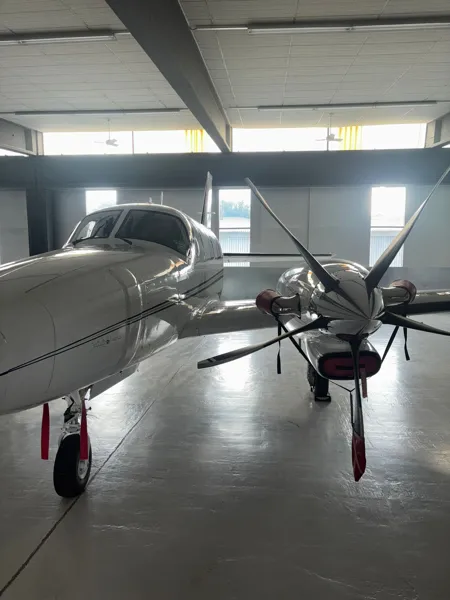
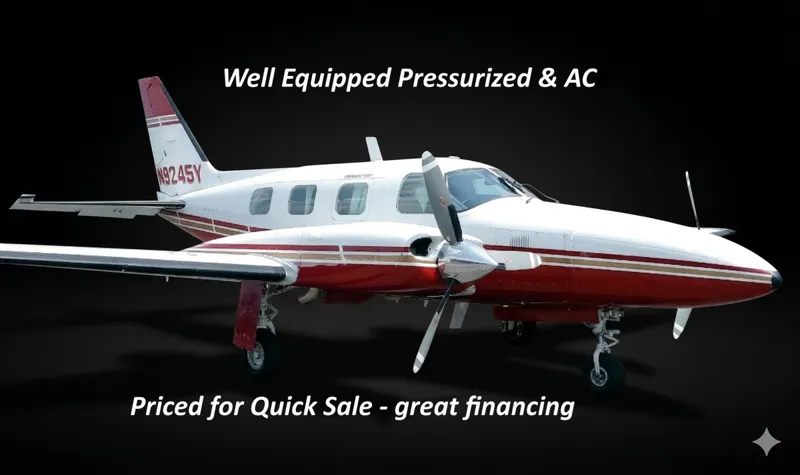
Piper built the Navajo and the Cheyenne simultaneously in the early 1970s, and the contrast between them is the clearest illustration of what a turboprop conversion actually changes. The Piper Navajo (PA-31, 1967–1984) is the piston twin — Lycoming IO-540 engines, room for six to eight occupants in various configurations, and the twin-engine reliability that pushed it into light charter, cargo, and multi-stop regional work. The Pressurized Navajo (PA-31P) added cabin pressurization and extended the Navajo's altitude reach without fundamentally changing its character: it remained a piston aircraft with piston maintenance overhead. The Piper Cheyenne II (PA-31T, 1974) changed the equation: the same basic PA-31 airframe fitted with Pratt & Whitney Canada PT6A-28 turboprops — Jet-A fuel, turbine reliability, and a power management simplicity that the piston IO-540 simply cannot match. The cross-shop is the recurring question in the light twin market: is turboprop worth what it costs?
Live Market Snapshot
Current asking-price market, aggregated across multiple marketplaces · refreshed daily
- For sale now
- 27
- Median asking
- $995,000
- Range
- $496,200–$1,505,955
- Listed on 2+ marketplaces
- 14
- Source marketplaces
- 9
- Model years available
- 1978–1987
- For sale now
- 40
- Median asking
- $262,250
- Range
- $123,300–$552,867
- Listed on 2+ marketplaces
- 10
- Source marketplaces
- 12
- Model years available
- 1967–1984
Live data from AeroGurus, aggregated daily across the used-aircraft market. Figures are current asking prices, not appraisals — confirm with a pre-buy inspection.
Safety Record
Absolute counts scale with fleet size — the most-produced types log more events without being less safe. Compare the % fatal.
| NTSB (1982–now) | Piper Cheyenne | Piper Navajo |
|---|---|---|
| All events | — | 1 |
| Serious | — | 0 |
| Fatal | — | 0 |
| Fatalities | — | 0 |
| % Fatal | — | 0% |
Full Specs Comparison
| Spec / Model | Piper Cheyenne | Piper Navajo |
|---|---|---|
|
|
|
| Price Range | $496,200 – $1,505,955 | $123,300 – $552,867 |
| Category | Multi Engine Turboprop | Multi Engine Piston |
| Model Specifications | ||
| Seats | 8 | 8 |
| Horsepower | 620 HP | — |
| Cruise Speed | 240 kts (444 km/h) | 206 kts (382 km/h) |
| Range | 1,400 nm (2,593 km) | 1,065 nm (1,972 km) |
| Service Ceiling | 31,000 ft (9,449 m) | 24,000 ft (7,315 m) |
| Max Gross Weight | 9,050 lbs (4,105 kg) | 6,500 lbs (2,948 kg) |
| Useful Load | 2,900 lbs (1,315 kg) | 2,800 lbs (1,270 kg) |
| Fuel Capacity | 365.0 gal (1382 L) | 182.0 gal (689 L) |
| Fuel Burn | 55.0 GPH (208 L/h) | 32.0 GPH (121 L/h) |
| TBO | 3,500 hrs | 1,800 hrs |
| Overhaul Cost | $300,000 | $42,000 |
| Annual Fixed | $100,000 | $30,000 |
| Hourly Variable | $650 | $350 |
| Engines | 2 x Turboprop | 2 x Piston (Turbocharged) |
Cost of Ownership
EstimatePiper Cheyenne
Piper Navajo
Which Should You Buy: Piper Cheyenne or Piper Navajo?
Bottom line: Choose the Piper Navajo for the lowest acquisition cost and accessible ownership in the PA-31 family — a well-maintained Navajo Chieftain seats seven or eight people and covers typical 200–600 nm missions with piston economics and a maintenance base that any competent general aviation shop can support. The Lycoming IO-540 is a familiar engine; its maintenance community is deep and affordable. Choose the Piper Cheyenne II when turbine reliability and higher cruise speed define the mission — the PT6A-28's resistance to in-flight failures, simpler power management, and smooth turbine operation change the character of the aircraft in ways that speed alone doesn't capture. Safety axis: turbine engines experience significantly fewer in-flight power losses than piston engines at comparable utilization — a difference that matters most in IMC and over terrain where a forced landing isn't obvious. The Navajo is a genuine, proven twin with real engine-out performance; the Cheyenne II raises the baseline reliability of both powerplants. Either type's single-engine performance demands current multi-engine training and engine-out proficiency.
Pick the Cheyenne if…
- Faster cruise — 240 kts vs 206 kts.
- Longer range — 1400 nm vs 1065 nm.
- Newer design — production from 1974 vs 1967.
Pick the Navajo if…
- Budget matters — from $123,300 vs $496,200, you save ~$372,900.
- Lower operating cost — ~$350/hr vs $650/hr.
- More inventory — 40 listings vs 25.
Auto-generated from current market data and published specs. Confirm with a pre-buy inspection and professional appraisal.