
Piper Cheyenne vs Piper M600
A buyer who has outgrown a pressurized piston single and is considering a turboprop step-up faces one of the most genuinely interesting questions in general aviation: twin-engine turboprop or single-engine turboprop? The Piper Cheyenne II (PA-31T) and the Piper M600 (PA-46-600TP) both offer pressurized turboprop performance in a Piper airframe, but they answer the question differently. The Cheyenne II is a twin — two PT6A-28 engines, multi-engine redundancy, a six-to-eight seat PA-31 cabin, and a used-market presence at prices that represent genuine value for turboprop capability. The M600 (2016) is a single — one PT6A-52, a PA-46 pressurized cabin for five to six, Garmin G3000 avionics, and on later variants an emergency autoland system with no equivalent in the piston world. The comparison distills to the oldest trade in turboprop aviation: twin redundancy versus single-engine simplicity and economics.
Live Market Snapshot
Current asking-price market, aggregated across multiple marketplaces · refreshed daily
- For sale now
- 27
- Median asking
- $995,000
- Range
- $496,200–$1,505,955
- Model years available
- 1978–1987
- For sale now
- 27
- Median asking
- $2,939,000
- Range
- $2,339,500–$3,832,056
- Model years available
- 2016–2026
Live data from AeroGurus, aggregated daily across the used-aircraft market. Figures are current asking prices, not appraisals — confirm with a pre-buy inspection.
Full Specs Comparison
| Spec / Model | Piper Cheyenne | Piper M600 |
|---|---|---|
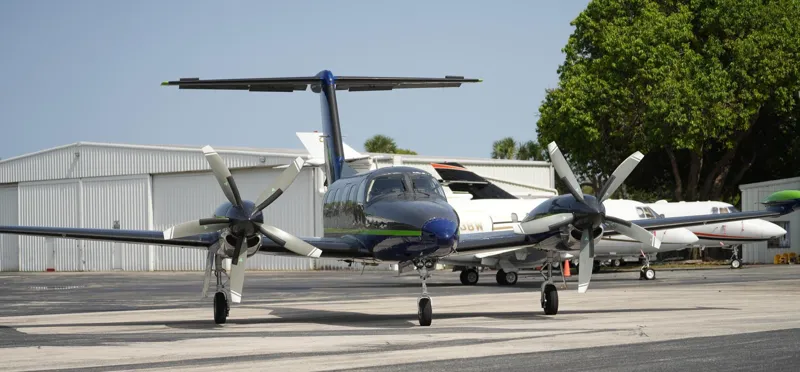
|
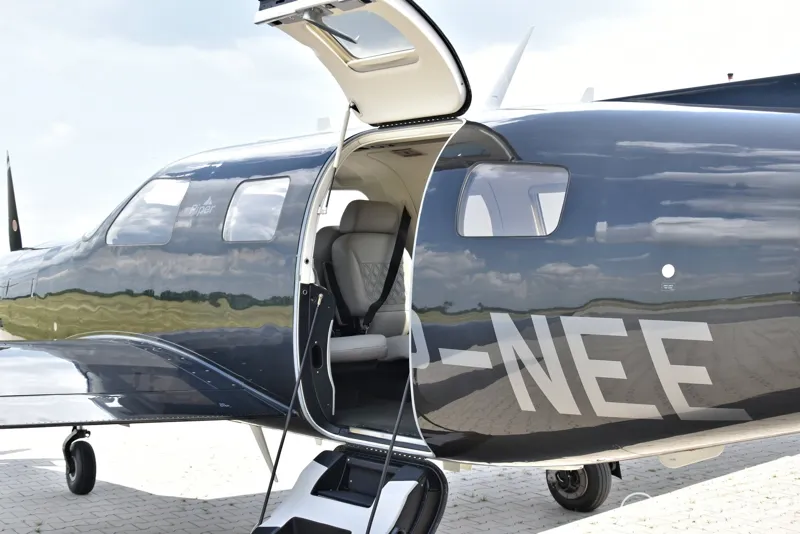
|
|
| Price Range | $496,200 – $1,505,955 | $2,339,500 – $3,832,056 |
| Category | Multi Engine Turboprop | Single Engine Turboprop |
| Model Specifications | ||
| Seats | 8 | 6 |
| Horsepower | 620 HP | 600 HP |
| Cruise Speed | 240 kts (444 km/h) | 274 kts (507 km/h) |
| Range | 1,400 nm (2,593 km) | 1,484 nm (2,748 km) |
| Service Ceiling | 31,000 ft (9,449 m) | 30,000 ft (9,144 m) |
| Max Gross Weight | 9,050 lbs (4,105 kg) | 6,000 lbs (2,722 kg) |
| Useful Load | 2,900 lbs (1,315 kg) | 2,400 lbs (1,089 kg) |
| Fuel Capacity | 365.0 gal (1382 L) | 260.0 gal (984 L) |
| Fuel Burn | 55.0 GPH (208 L/h) | 40.0 GPH (151 L/h) |
| TBO | 3,500 hrs | 3,500 hrs |
| Overhaul Cost | $300,000 | $350,000 |
| Annual Fixed | $100,000 | $120,000 |
| Hourly Variable | $650 | $750 |
| Engines | 2 x Turboprop | 1 x Turboprop |
Cost of Ownership
EstimatePiper Cheyenne
Piper M600
Which Should You Buy: Piper Cheyenne or Piper M600?
Bottom line: Choose the Piper Cheyenne II for twin-engine redundancy on routes over mountainous terrain, extended water crossings, or frequent hard IMC in winter — two PT6A turboprops that genuinely climb on one engine change the risk profile compared to any single, regardless of how reliable that single's powerplant is. The Cheyenne's multi-passenger capacity and lower acquisition cost than the M600 make it compelling for operators who need the seats and accept the twin's maintenance overhead. Choose the Piper M600 for single-engine economics, modern glass avionics, and a significantly faster cruise — the PT6A-52's established reliability, Garmin G3000 situational awareness, and approximately 274 kt true airspeed change the character of the aircraft on longer missions. Safety axis: the twin vs single question is honest risk assessment, not a clear winner. The Cheyenne's two-engine architecture provides genuine protection in terrain and overwater scenarios where an engine failure demands a path to an airport; the M600's argument is that the PT6A is rarely the failure mode, and that the emergency autoland system on equipped M600/SLS variants addresses incapacitation scenarios the Cheyenne cannot. Evaluate route profile, weather exposure, and your own piloting proficiency — neither answer is universally correct.
Pick the Cheyenne if…
- Budget matters — from $496,200 vs $2,339,500, you save ~$1,843,300.
- Lower operating cost — ~$650/hr vs $750/hr.
- More seats — 8 vs 6.
Pick the M600 if…
- Faster cruise — 274 kts vs 240 kts.
- Longer range — 1484 nm vs 1400 nm.
- Newer design — production from 2016 vs 1974.
- More inventory — 28 listings vs 25.
Auto-generated from current market data and published specs. Confirm with a pre-buy inspection and professional appraisal.