
Piper Cherokee vs Piper Malibu
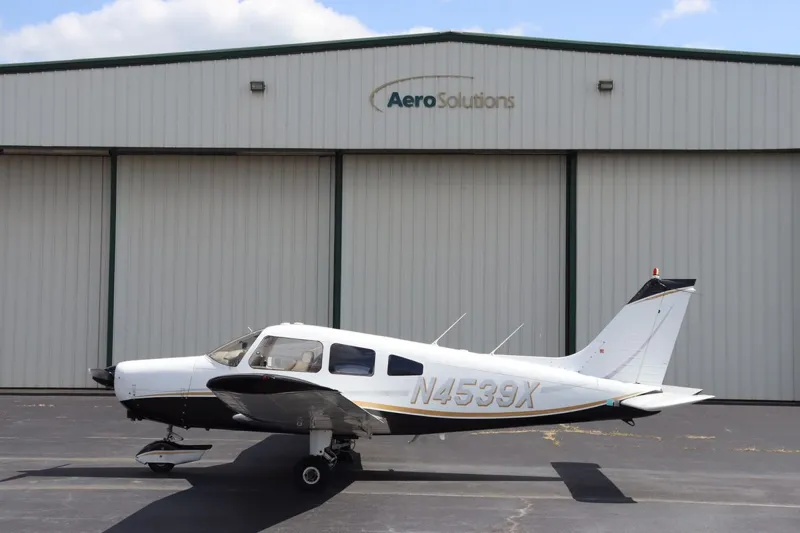
The Piper Cherokee and the Piper Malibu represent thirty-five years of progress within one manufacturer's product line — and two entirely different categories of aircraft. The Cherokee (PA-28 family, 1961 onward) defines accessible general aviation: fixed gear, normally aspirated Lycoming engines, and a forgiving airframe that generations of student and private pilots have learned on. The Malibu (PA-46-310P, 1983 onward; Mirage and M350 following) defines ambitious general aviation: pressurized cabin, retractable gear, turbocharged engine, PA-46 type rating, and high-altitude IFR operations that the Cherokee simply cannot approach. The cross-shop is less a direct comparison than a decision point — a Cherokee pilot asking whether the Malibu is the next step, and what that step actually requires.
Live Market Snapshot
Current asking-price market, aggregated across multiple marketplaces · refreshed daily
- For sale now
- 602
- Median asking
- $116,400
- Range
- $59,948–$277,250
- Listed on 2+ marketplaces
- 164
- Source marketplaces
- 23
- Model years available
- 1961–2026
- For sale now
- 281
- Median asking
- $950,000
- Range
- $417,000–$3,032,000
- Listed on 2+ marketplaces
- 103
- Source marketplaces
- 18
- Model years available
- 1984–2026
Live data from AeroGurus, aggregated daily across the used-aircraft market. Figures are current asking prices, not appraisals — confirm with a pre-buy inspection.
Safety Record
Absolute counts scale with fleet size — the most-produced types log more events without being less safe. Compare the % fatal.
| NTSB (1982–now) | Piper Cherokee | Piper Malibu |
|---|---|---|
| All events | 1 | — |
| Serious | 0 | — |
| Fatal | 0 | — |
| Fatalities | 0 | — |
| % Fatal | 0% | — |
Full Specs Comparison
| Spec / Model | Piper Cherokee | Piper Malibu |
|---|---|---|
|

|
|
| Price Range | $59,948 – $277,250 | $417,000 – $3,032,000 |
| Category | Single Engine Piston | Single Engine Piston |
| Model Specifications | ||
| Seats | 4 | 6 |
| Horsepower | 150 HP | 310 HP |
| Cruise Speed | 117 kts (217 km/h) | 213 kts (394 km/h) |
| Range | 525 nm (972 km) | 1,300 nm (2,408 km) |
| Service Ceiling | 14,300 ft (4,359 m) | 25,000 ft (7,620 m) |
| Max Gross Weight | 2,150 lbs (975 kg) | 4,100 lbs (1,860 kg) |
| Useful Load | 850 lbs (386 kg) | 1,200 lbs (544 kg) |
| Fuel Capacity | 50.0 gal (189 L) | 120.0 gal (454 L) |
| Fuel Burn | 8.0 GPH (30 L/h) | 16.0 GPH (61 L/h) |
| TBO | 2,000 hrs | 2,000 hrs |
| Overhaul Cost | $28,000 | $35,000 |
| Annual Fixed | $16,000 | $22,000 |
| Hourly Variable | $120 | $190 |
| Engines | 1 x Piston | 1 x Piston (Turbocharged) |
Cost of Ownership
EstimatePiper Cherokee
Piper Malibu
Which Should You Buy: Piper Cherokee or Piper Malibu?
Bottom line: Choose the Piper Cherokee for the mission that fits a private pilot's first or second aircraft — straightforward operation, predictable handling, and economics that make sense at 100–200 annual hours. The Cherokee family covers a wide range from the basic PA-28-140 through the Cherokee Six (PA-32) and the Arrow (PA-28R) retractable, giving owners a progression path without changing brands. Choose the Piper Malibu when the mission has genuinely outgrown what a Cherokee can accomplish — pressurized altitude operations, 800+ nm nonstop range, or weather routing above flight levels that the Cherokee must route around or cancel for. Safety axis: a Cherokee at 8,000 feet operates in terrain where an engine failure typically allows a forced landing on a nearby airport or field; a Malibu at FL200 over mountainous IMC in winter does not share that margin. Matching the aircraft to the pilot's actual currency, recency, and mission discipline matters more in the PA-46 than in any Cherokee variant — the capability is real, and so is the consequence of a gap.
Pick the Cherokee if…
- Budget matters — from $59,948 vs $417,000, you save ~$357,052.
- Lower operating cost — ~$120/hr vs $190/hr.
- More inventory — 27 listings vs 23.
Pick the Malibu if…
- More seats — 6 vs 4.
- Faster cruise — 213 kts vs 117 kts.
- Longer range — 1300 nm vs 525 nm.
- Newer design — production from 1984 vs 1961.
Auto-generated from current market data and published specs. Confirm with a pre-buy inspection and professional appraisal.