
Learjet 60 vs Learjet 75
The Learjet 60 and the Learjet 75 share a name but not a lineage — a distinction that matters because the two aircraft are routinely compared by buyers who assume the 75 is the 60's successor. It is not. The Learjet 60 (1993) stretched the Learjet 55 airframe and fitted Pratt & Whitney Canada PW305A turbofans, producing the largest and most range-capable Learjet ever built — a midsize jet that could complete U.S. coast-to-coast nonstop with a meaningful payload. The Learjet 75 (2013) replaced the Learjet 45, not the 60, carrying the smaller Learjet 45 platform forward with Honeywell TFE731-40 series engines and a substantially updated Garmin G5000 flight deck on the Liberty variant. The two aircraft compete in overlapping preowned price bands despite belonging to completely different design families; understanding which platform underlies each is essential to comparing them honestly.
Live Market Snapshot
Current asking-price market, aggregated across multiple marketplaces · re-checked on a rolling daily cycle
- For sale now
- 45
- Median asking
- $3,650,000
- Range
- $2,342,800–$4,870,000
- Model years available
- 1994–2013
- For sale now
- 16
- Model years available
- 2013–2021
Live data from AeroGurus, aggregated daily across the used-aircraft market. Figures are current asking prices, not appraisals — confirm with a pre-buy inspection.
Safety Record
Absolute counts scale with fleet size — the most-produced types log more events without being less safe. Compare the % fatal.
| NTSB (1982–now) | Learjet 60 | Learjet 75 |
|---|---|---|
| All events | 8 | 1 |
| Serious | 0 | 0 |
| Fatal | 0 | 0 |
| Fatalities | 0 | 0 |
| % Fatal | 0% | 0% |
Full Specs Comparison
| Spec / Model | Learjet 60 | Learjet 75 |
|---|---|---|
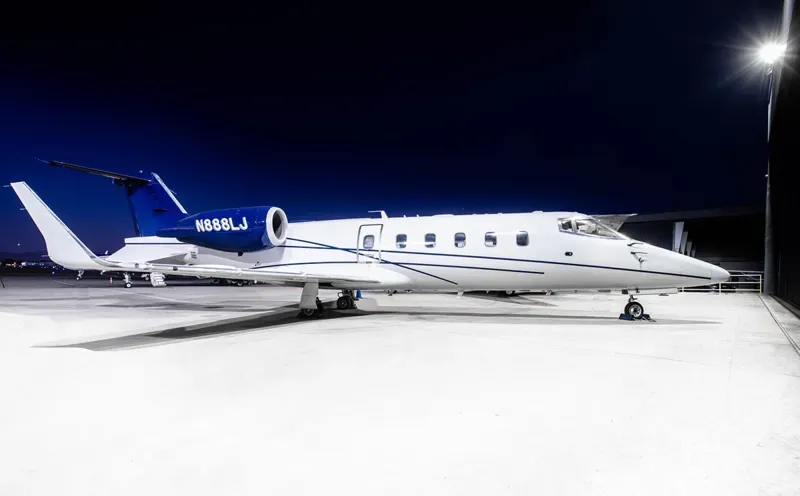
|

|
|
| Price Range | $2,342,800 – $4,870,000 | $3,495,000 – $7,958,750 |
| Category | Midsize Jet | Light Jet |
| Model Specifications | ||
| Seats | 10 | 9 |
| Cruise Speed | 438 kts (811 km/h) | 435 kts (806 km/h) |
| Range | 2,405 nm (4,454 km) | 2,040 nm (3,778 km) |
| Service Ceiling | 51,000 ft (15,545 m) | 51,000 ft (15,545 m) |
| Max Gross Weight | 23,500 lbs (10,660 kg) | 21,500 lbs (9,752 kg) |
| Useful Load | 5,800 lbs (2,631 kg) | 5,100 lbs (2,313 kg) |
| Fuel Capacity | 635.0 gal (2403 L) | 576.0 gal (2180 L) |
| Fuel Burn | 185.0 GPH (700 L/h) | 170.0 GPH (643 L/h) |
| TBO | 5,000 hrs | 5,000 hrs |
| Overhaul Cost | $450,000 | $420,000 |
| Annual Fixed | $380,000 | $380,000 |
| Hourly Variable | $2,800 | $2,600 |
| Engines | 2 x Turbofan | 2 x Turbofan |
Cost of Ownership
EstimateLearjet 60
Learjet 75
Which Should You Buy: Learjet 60 or Learjet 75?
Bottom line: Choose the Learjet 60 for the larger cabin and greater range — the 60's stretched-55 airframe provides more interior volume and longer legs that the Learjet 75 cannot match on transcontinental routes with full loads. For operators who need the range and don't want to compromise cabin size in the Learjet lineup, the 60 (or 60 XR) is the answer. Choose the Learjet 75 for modern avionics and a lighter, more efficient platform on shorter missions — the Learjet 75's Garmin G5000 flight deck (on Liberty-configured aircraft) represents a generational leap from the 60's original avionics, and the TFE731-40's more modern engine cycle performs efficiently on shorter routes where the 60's range advantage is irrelevant. Safety axis: both types carry separate type certificates and require separate type ratings — a pilot current on the Learjet 60 cannot act as PIC of the Learjet 75 without a separate practical test. Verify type currency before evaluating either aircraft for acquisition. Bombardier ceased Learjet production in 2021; both types are supported by independent MRO providers and the Bombardier aftermarket organization.
Pick the 60 if…
- Budget matters — from $2,342,800 vs $3,495,000, you save ~$1,152,200.
- More seats — 10 vs 9.
- Faster cruise — 438 kts vs 435 kts.
- Longer range — 2405 nm vs 2040 nm.
- More inventory — 43 listings vs 14.
Pick the 75 if…
- Lower operating cost — ~$2600/hr vs $2800/hr.
- Newer design — production from 2014 vs 1993.
Auto-generated from current market data and published specs. Confirm with a pre-buy inspection and professional appraisal.