
Hawker 400 vs Hawker 800
The Hawker 800 and Hawker 400 share a brand name and nothing else structurally. The Hawker 800 descends from the British Aerospace BAe 125-800 — a purpose-built large light jet with Honeywell TFE731-5BR engines, stand-up headroom, and a transatlantic range capability that made it one of the dominant mid-size jets of the 1980s and 1990s. The Hawker 400 descends from the Mitsubishi MU-300 Diamond — a small Japanese-designed light jet that Beechcraft acquired as the Beechjet 400, Raytheon rebranded as the Hawker 400XP, and Textron eventually absorbed. Both are now Hawker by name; they are very different aircraft by everything else.
Live Market Snapshot
Current asking-price market, aggregated across multiple marketplaces · refreshed daily
- For sale now
- 44
- Median asking
- $1,285,000
- Range
- $635,000–$1,631,850
- Model years available
- 1986–2017
- For sale now
- 55
- Median asking
- $2,072,500
- Range
- $1,212,500–$3,000,000
- Model years available
- 1985–2006
Live data from AeroGurus, aggregated daily across the used-aircraft market. Figures are current asking prices, not appraisals — confirm with a pre-buy inspection.
Safety Record
Absolute counts scale with fleet size — the most-produced types log more events without being less safe. Compare the % fatal.
| NTSB (1982–now) | Hawker 400 | Hawker 800 |
|---|---|---|
| All events | 1 | 1 |
| Serious | 0 | 0 |
| Fatal | 0 | 0 |
| Fatalities | 0 | 0 |
| % Fatal | 0% | 0% |
Full Specs Comparison
| Spec / Model | Hawker 400 | Hawker 800 |
|---|---|---|
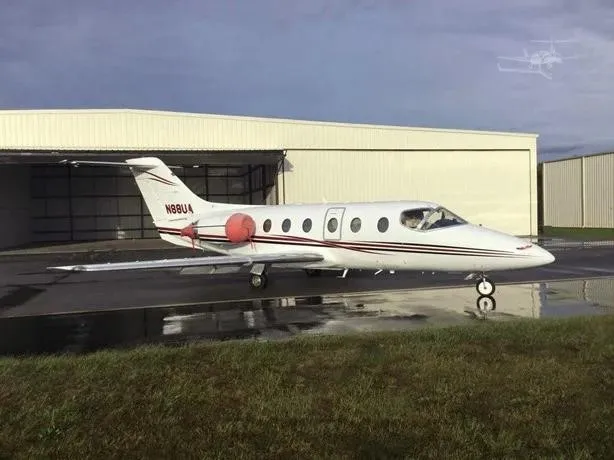
|
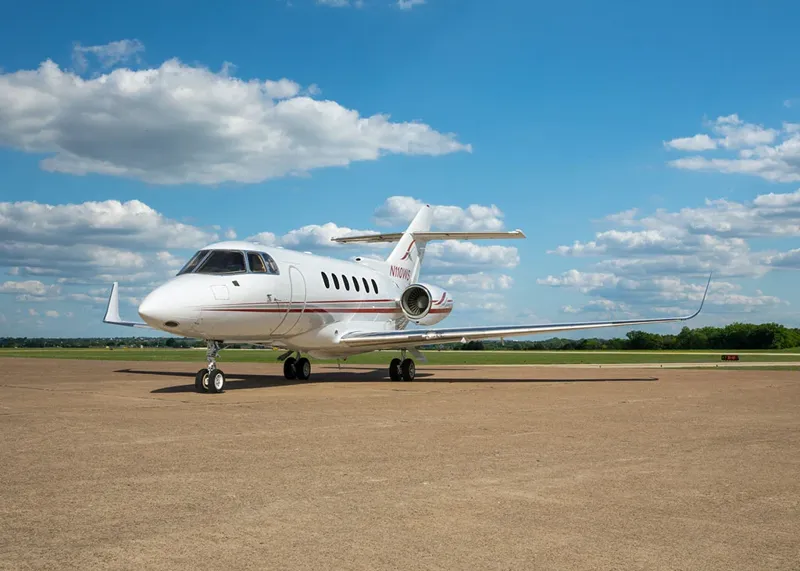
|
|
| Price Range | $635,000 – $1,631,850 | $1,212,500 – $3,000,000 |
| Category | Light Jet | Midsize Jet |
| Model Specifications | ||
| Seats | 8 | 8 |
| Cruise Speed | 450 kts (833 km/h) | 400 kts (741 km/h) |
| Range | 1,351 nm (2,502 km) | 2,825 nm (5,232 km) |
| Service Ceiling | 45,000 ft (13,716 m) | 41,000 ft (12,497 m) |
| Max Gross Weight | 16,300 lbs (7,394 kg) | 27,400 lbs (12,429 kg) |
| Useful Load | 3,000 lbs (1,361 kg) | — |
| Fuel Burn | 160.0 GPH (606 L/h) | 240.0 GPH (908 L/h) |
| Engines | 2 x Turbofan | 2 x Turbofan |
Which Should You Buy: Hawker 400 or Hawker 800?
Bottom line: Choose the Hawker 400XP for lower acquisition cost, a lighter operating footprint, and a capable small light jet for four-to-five passenger missions under 1,500 nm. The 400XP's Collins Pro Line 21 avionics and Pratt & Whitney Canada JT15D-5 engines are well-supported. Choose the Hawker 800 when you need the larger cabin — the 800's stand-up headroom (5'9"), wider aisle, and full galley define a different tier of passenger experience. The 800's transatlantic range (approximately 2,700 nm) opens mission profiles the 400XP at 1,550 nm cannot address. Safety axis: both aircraft have solid twin-engine Type Certificate records; the Hawker 800's stand-up cabin means passengers can move about the aircraft on long legs, reducing discomfort-related incidents. No meaningful structural safety differential; differentiator is mission fit and cabin capability.
Pick the 400 if…
- Budget matters — from $635,000 vs $1,212,500, you save ~$577,500.
- Faster cruise — 450 kts vs 400 kts.
Pick the 800 if…
- Longer range — 2825 nm vs 1351 nm.
- More inventory — 56 listings vs 43.
Auto-generated from current market data and published specs. Confirm with a pre-buy inspection and professional appraisal.