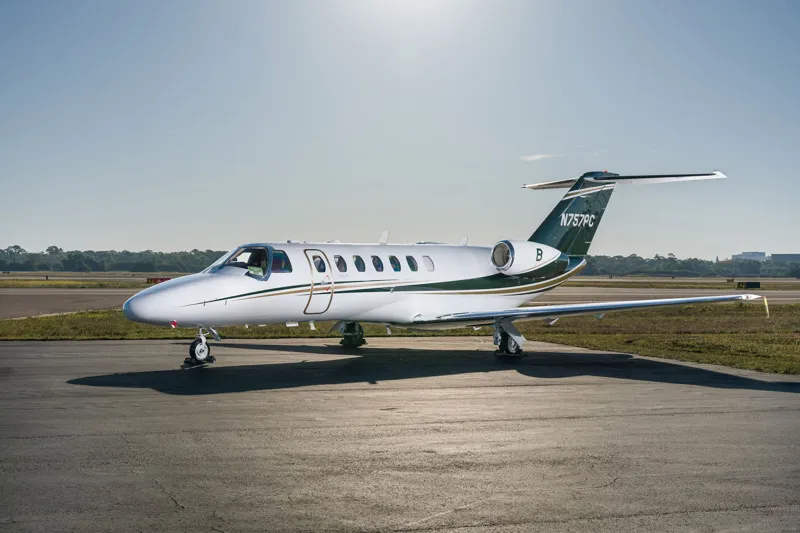
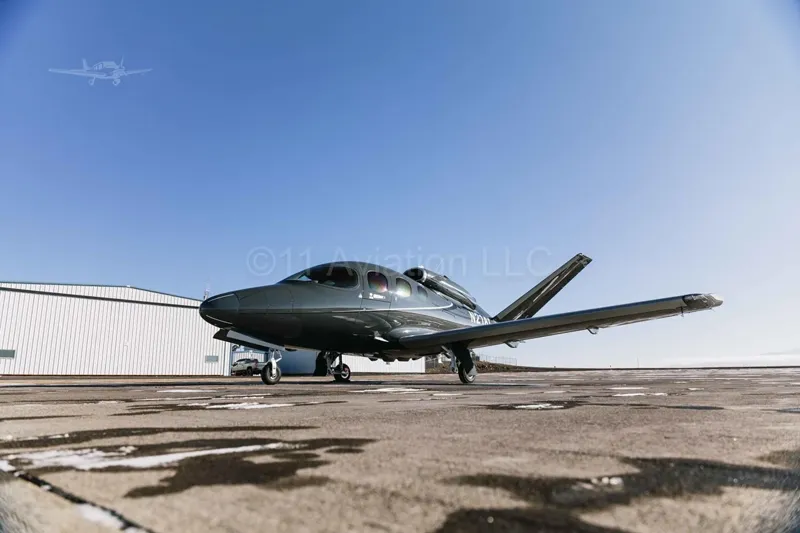
Cessna Citation CJ3 vs Cirrus Vision SF50

The Cirrus SF50 Vision Jet and Cessna Citation CJ3 are very different machines. The single-engine SF50 is an owner-flown personal jet with a whole-airframe parachute, modest speed, and low operating costs, while the twin-FJ44 CJ3 is a true light jet with airline-style speed, altitude, range, and a far larger cabin.

Live Market Snapshot

Current asking-price market, aggregated across multiple marketplaces · refreshed daily

Cessna Citation CJ3
For sale now
64
Model years available
2004–2026
Cirrus Vision SF50
For sale now
42
Median asking
$2,999,950
Range
$1,035,000–$3,599,965
Model years available
2016–2025

Live data from AeroGurus, aggregated daily across the used-aircraft market. Figures are current asking prices, not appraisals — confirm with a pre-buy inspection.

Full Specs Comparison

Swipe to see all specs
Spec / Model Cessna Citation CJ3 Cirrus Vision SF50
Cessna Citation CJ3
View 68 listings →
Median $5,422,500
Cirrus Vision SF50
View 53 listings →
Median $2,999,950
Price Range $4,840,000 – $5,580,000 $1,035,000 – $3,599,965
Category Light Jet Very Light Jet
Model Specifications
Seats 9 7
Cruise Speed 391 kts (724 km/h) 311 kts (576 km/h)
Range 1,875 nm (3,472 km) 1,200 nm (2,222 km)
Service Ceiling 45,000 ft (13,716 m) 31,000 ft (9,449 m)
Max Gross Weight 13,870 lbs (6,291 kg) 6,040 lbs (2,740 kg)
Useful Load 3,230 lbs (1,465 kg) 2,180 lbs (989 kg)
Fuel Capacity 438.0 gal (1658 L) 296.0 gal (1120 L)
Fuel Burn 125.0 GPH (473 L/h) 50.0 GPH (189 L/h)
TBO 5,000 hrs 4,000 hrs
Overhaul Cost $275,000 $250,000
Annual Fixed $335,000 $200,000
Hourly Variable $1,850 $950
Engines 2 x Turbofan 1 x Turbofan

Cost of Ownership

Estimate

Cessna Citation CJ3

Fuel$688/hr
Variable$1,850/hr
Annual Fixed$335,000/yr
Total (200 hrs/yr) $705,000/yr

Cirrus Vision SF50

Fuel$275/hr
Variable$950/hr
Annual Fixed$200,000/yr
Total (200 hrs/yr) $390,000/yr

Which Should You Buy: Cessna Citation CJ3 or Cirrus Vision SF50?

Bottom line: Choose the SF50 for single-engine economy, the airframe parachute, and an easy step-up from a piston or turboprop; pick the CJ3 for genuine light-jet speed, range, and cabin room. Mission, runway needs, and budget decide this pairing.

Pick the Citation CJ3 if…

  • More seats — 9 vs 7.
  • Faster cruise — 391 kts vs 311 kts.
  • Longer range — 1875 nm vs 1200 nm.
  • More inventory — 68 listings vs 53.

Pick the Vision SF50 if…

  • Budget matters — from $1,035,000 vs $4,840,000, you save ~$3,805,000.
  • Lower operating cost — ~$950/hr vs $1850/hr.
  • Newer design — production from 2016 vs 2004.

Auto-generated from current market data and published specs. Confirm with a pre-buy inspection and professional appraisal.

Frequently Asked Questions

What's the key difference between the Cirrus Vision SF50 and Citation CJ3?
Single versus twin engine, and safety philosophy. The Vision SF50 is a single-engine personal jet — one Williams FJ33-5A, up to five seats, approximately 300 kt cruise, approximately 1,200 nm range — with an airframe parachute (CAPS) as the backup for engine failure. The CJ3 is a conventional twin-engine certified jet — two Williams FJ44-3A-24 engines, six seats, approximately 416 kt cruise, approximately 1,900 nm range. The CJ3 is faster, has more range, and seats more; the SF50 replaces engine redundancy with a parachute.
SF50 or CJ3 — which jet?
Buy the SF50 if single-pilot personal jet travel within ~1,200 nm, lower acquisition cost, and the Cirrus safety ecosystem (CAPS plus the SR-series training pipeline) define the mission — it is designed as the natural progression for Cirrus SR22 owners. Buy the CJ3 if range over 1,500 nm, six seats, twin-engine certification, and the Citation service network are required. The CJ3 is the more capable aircraft; the SF50 is the more accessible personal-jet entry.
Is the SF50's single engine a real safety concern?
The SF50's CAPS parachute is the engineered mitigation for single-engine failure, and it has been used successfully in real-world incidents. Whether it is adequate depends on the pilot's risk tolerance and operating environment. Over water, remote terrain, or high-traffic IFR environments, twin-engine redundancy remains the standard preference; for typical personal flying in developed airspace with CAPS as backup, the SF50's safety record has been strong.
How do specs compare?
SF50: one Williams FJ33-5A, up to five seats, single engine, ~300 kt, ~1,200 nm, CAPS. CJ3: two Williams FJ44-3A-24, six seats, twin engine, ~416 kt, ~1,900 nm.
Which is cheaper to operate?
The SF50 has lower operating costs — one engine versus two, lower fuel burn, and simpler maintenance. The CJ3's twin-engine operating cost per hour is higher, though its greater speed partially offsets this on a per-nm basis. For pilots who fly frequently and value the CJ3's range, the per-nm cost difference narrows.
Which should I buy?
SF50 for personal-jet entry from a Cirrus background — lower cost, the CAPS safety system, and simpler operation. CJ3 when mission range, twin-engine standards, or six seats are requirements. Most SF50 buyers are Cirrus-ecosystem graduates; most CJ3 buyers are owner-pilots who need proven twin-engine jet capability.
Which is better, Cessna Citation CJ3 or Cirrus Vision SF50?
It depends on your mission and budget. The Citation CJ3 cruises at 391 kts with 1,875 nm range. The Vision SF50 cruises at 311 kts with 1,200 nm range. Review the specs table above to find which fits your flying profile.
How do prices compare?
Prices vary by year, hours, avionics, and condition. Always get a pre-buy inspection.
What's the difference between Cessna Citation CJ3 and Cirrus Vision SF50?
Citation CJ3 engine: WILLIAMS FJ44-3A. Seats: 9 vs 7. Cruise: 391 vs 311 kts. Range: 1875 vs 1200 nm.
Which is cheaper to operate per hour?
Citation CJ3: about $1850/hr variable cost. Vision SF50: about $950/hr variable cost. Variable cost includes fuel, reserves and overhaul accruals. Annual fixed costs (hangar, insurance, annual inspection) add to the total.
Which has more seats and useful load?
Citation CJ3: 9 seats / 3,230 lb useful load. Vision SF50: 7 seats / 2,180 lb useful load. Useful load = max gross weight minus empty weight; it determines how much fuel plus payload you can carry.
How does maintenance compare — TBO and overhaul cost?
Citation CJ3: 5,000-hour TBO, overhaul ~$275,000. Vision SF50: 4,000-hour TBO, overhaul ~$250,000. Reaching the time-between-overhaul (TBO) triggers a mandatory engine/airframe rebuild that affects resale value.
Disclaimer: All prices and cost estimates are from third-party sources for informational purposes only. Always obtain professional appraisal and inspection before purchase.
Prices updated daily · Data: FAA Registry, NTSB · About our data