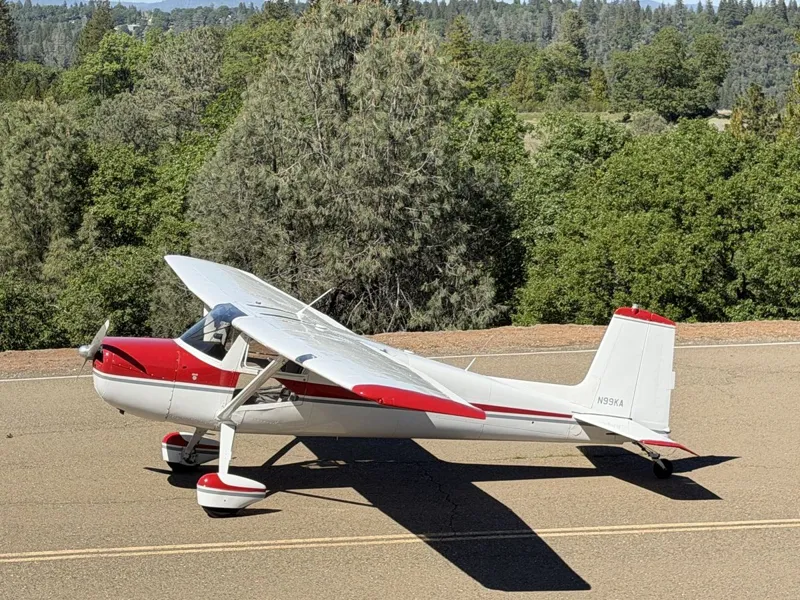
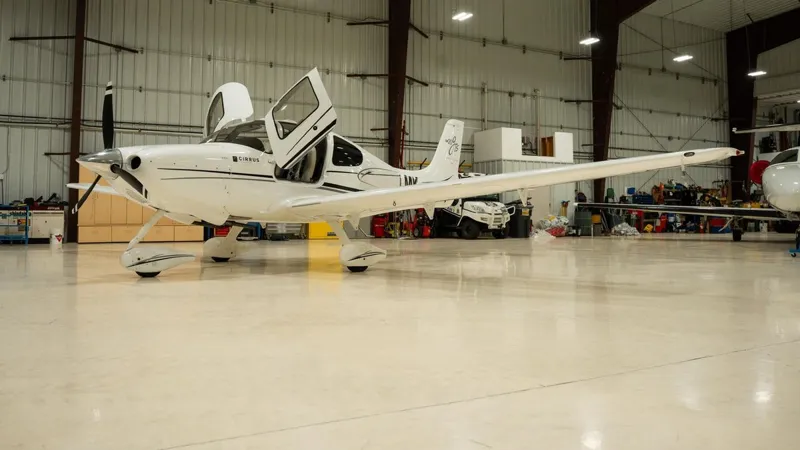
Cessna 150 vs Cirrus SR20

The Cessna 150/152 (two-seat trainer) and Cirrus SR20 (four-seat cross-country) are very different aircraft — the 150 is a two-seat fixed-gear primary trainer (~90 kt); the SR20 is a modern four-seat composite single (~155 kt) with CAPS parachute and Garmin glass.

Live Market Snapshot

Current asking-price market, aggregated across multiple marketplaces · re-checked on a rolling daily cycle

Cessna 150
For sale now
136
Median asking
$53,250
Range
$32,955–$91,808
Model years available
1959–1978
Cirrus SR20
For sale now
166
Median asking
$424,900
Range
$179,000–$739,000
Model years available
1999–2026

Live data from AeroGurus, aggregated daily across the used-aircraft market. Figures are current asking prices, not appraisals — confirm with a pre-buy inspection.

Generations Breakdown

Per-generation specs — engine/weight/performance differ materially across production eras.

Per-era “For sale” counts exclude listings with unspecified year and separate variants (RG retractable, Hawk XP), so they may not sum to the total above.

Cessna 150 — 1 generations

GenerationYearsEngineMTOWCruiseRangeFor sale
172 O-320 150hp 1968–1976 O-320-E2D 2300 120 585 131

Cirrus SR20 — 0 generations

GenerationYearsEngineMTOWCruiseRangeFor sale

Safety Record

Absolute counts scale with fleet size — the most-produced types log more events without being less safe. Compare the % fatal.

NTSB (1982–now)Cessna 150Cirrus SR20
All events324137
Serious3511
Fatal42716
Fatalities61134
% Fatal13%43%

Full Specs Comparison

Swipe to see all specs
Spec / Model Cessna 150 Cirrus SR20
Cessna 150
View 51 listings →
Median $53,250
Cirrus SR20
View 167 listings →
Median $424,900
Price Range $32,955 – $91,808 $179,000 – $739,000
Category Single Engine Piston Single Engine Piston
Model Specifications
Seats 2 4
Horsepower 100 HP 215 HP
Cruise Speed 97 kts (180 km/h) 155 kts (287 km/h)
Range 420 nm (778 km) 875 nm (1,620 km)
Service Ceiling 14,000 ft (4,267 m) 17,500 ft (5,334 m)
Max Gross Weight 1,600 lbs (726 kg) 3,150 lbs (1,429 kg)
Useful Load 530 lbs (240 kg) 900 lbs (408 kg)
Fuel Capacity 26.0 gal (98 L) 56.0 gal (212 L)
Fuel Burn 6.0 GPH (23 L/h) 11.5 GPH (44 L/h)
TBO 1,800 hrs 1,500 hrs
Overhaul Cost $25,000 $32,000
Annual Fixed $15,000 $22,000
Hourly Variable $100 $150
Engines 1 x Piston 1 x Piston

Cost of Ownership

Estimate

Cessna 150

Fuel$33/hr
Variable$100/hr
Annual Fixed$15,000/yr
Total (200 hrs/yr) $35,000/yr

Cirrus SR20

Fuel$63/hr
Variable$150/hr
Annual Fixed$22,000/yr
Total (200 hrs/yr) $52,000/yr

Which Should You Buy: Cessna 150 or Cirrus SR20?

Bottom line: Choose the 150/152 only for primary training or a cheap fun-flyer two-seater. Choose the SR20 for a real four-seat travel airplane with modern systems — the two aircraft don't really compete; they serve different missions at very different price points.

Pick the 150 if…

  • Budget matters — from $32,955 vs $179,000, you save ~$146,045.
  • Lower operating cost — ~$100/hr vs $150/hr.

Pick the SR20 if…

  • More seats — 4 vs 2.
  • Faster cruise — 155 kts vs 97 kts.
  • Longer range — 875 nm vs 420 nm.
  • Newer design — production from 1999 vs 1959.
  • More inventory — 167 listings vs 51.

Auto-generated from current market data and published specs. Confirm with a pre-buy inspection and professional appraisal.

Frequently Asked Questions

What's the key difference between the Cessna 150 and Cirrus SR20?
Era and safety philosophy. The Cessna 150 is a 1960s–1970s two-seat metal trainer with the Continental O-200-A (100 hp), mechanical gauges, and a proven five-decade training record. The Cirrus SR20 is a modern four-seat composite aircraft with a Continental IO-360 (200 hp), the CAPS whole-aircraft parachute, glass avionics, and approximately 155 kt cruise. The SR20 is twice as powerful, seats twice as many, and is a fundamentally different class of aircraft.
150 or SR20 — which should I buy?
Buy the 150 if budget primary training, two-seat ownership at the absolute lowest cost, or simplicity is the goal — it is the canonical primary trainer and costs a fraction of the SR20. Buy the SR20 if four seats, CAPS safety, modern avionics, and genuine cross-country speed are worth the significantly higher cost. The SR20 is not a 150 upgrade — it's a different aircraft for a different buyer.
How significant is the SR20's CAPS?
The Cirrus Airframe Parachute System (CAPS) has been activated in multiple real-world incidents and has saved lives that a conventional recovery attempt would not. For owner-pilots who regularly fly IFR or operate in mountainous terrain, CAPS provides a genuine last-resort safety margin. The 150 has no such system — outcomes in severe emergencies depend entirely on pilot skill.
How do specs compare?
Cessna 150: Continental O-200-A (100 hp), two seats, fixed gear, mechanical gauges, ~100–107 kt. Cirrus SR20: Continental IO-360 (~200 hp), four seats, fixed gear, glass avionics, ~155 kt, CAPS.
Which is cheaper to operate?
The 150 is dramatically less expensive — smaller engine, lower acquisition cost, and simple mechanical gauges. The SR20's Continental IO-360 and glass-avionics database subscriptions add annual cost. For pure training economics the 150 wins; for practical four-seat ownership with modern safety systems, the SR20 earns its cost.
Which should I buy?
150 for budget primary training and two-seat casual ownership — the most economical aircraft you can fly. SR20 for modern four-seat touring with CAPS and glass avionics — a genuinely capable personal aircraft for IFR cross-country flying. Different aircraft for different stages and purposes of aviation.
Which is better, Cessna 150 or Cirrus SR20?
It depends on your mission and budget. The 150 cruises at 97 kts with 420 nm range. The SR20 cruises at 155 kts with 875 nm range. Review the specs table above to find which fits your flying profile.
How do prices compare?
Cessna 150: from $89,000. Cirrus SR20: from $239,900. Prices vary by year, hours, avionics, and condition. Always get a pre-buy inspection.
What's the difference between Cessna 150 and Cirrus SR20?
150 engine: CONTINENTAL O-200 (100 hp). SR20 engine: Continental IO-360-ES (215 hp). Seats: 2 vs 4. Cruise: 97 vs 155 kts. Range: 420 vs 875 nm.
Which is cheaper to operate per hour?
150: about $100/hr variable cost. SR20: about $150/hr variable cost. Variable cost includes fuel, reserves and overhaul accruals. Annual fixed costs (hangar, insurance, annual inspection) add to the total.
Which has more seats and useful load?
150: 2 seats / 530 lb useful load. SR20: 4 seats / 900 lb useful load. Useful load = max gross weight minus empty weight; it determines how much fuel plus payload you can carry.
How does maintenance compare — TBO and overhaul cost?
150: 1,800-hour TBO, overhaul ~$25,000. SR20: 1,500-hour TBO, overhaul ~$32,000. Reaching the time-between-overhaul (TBO) triggers a mandatory engine/airframe rebuild that affects resale value.
Disclaimer: All prices and cost estimates are from third-party sources for informational purposes only. Always obtain professional appraisal and inspection before purchase.
Prices re-checked on a rolling cycle — most within a few days · Data: FAA Registry, NTSB · About our data