
Cessna 172 vs Cessna TTx
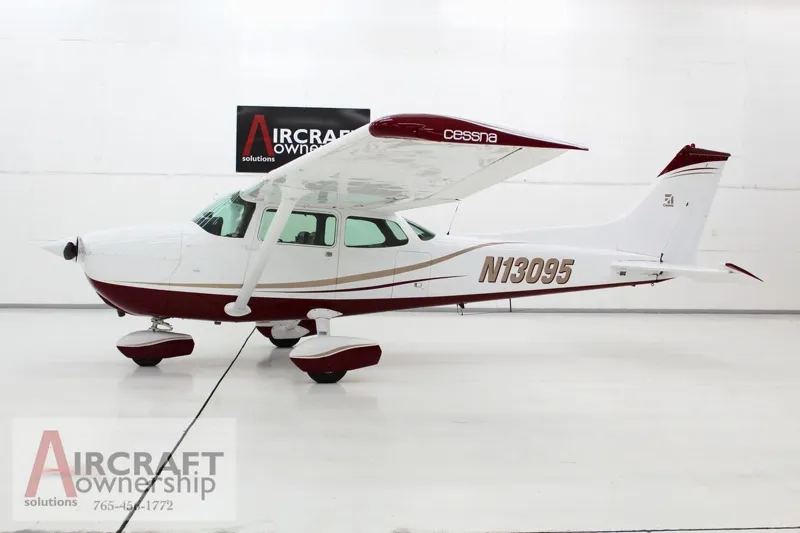
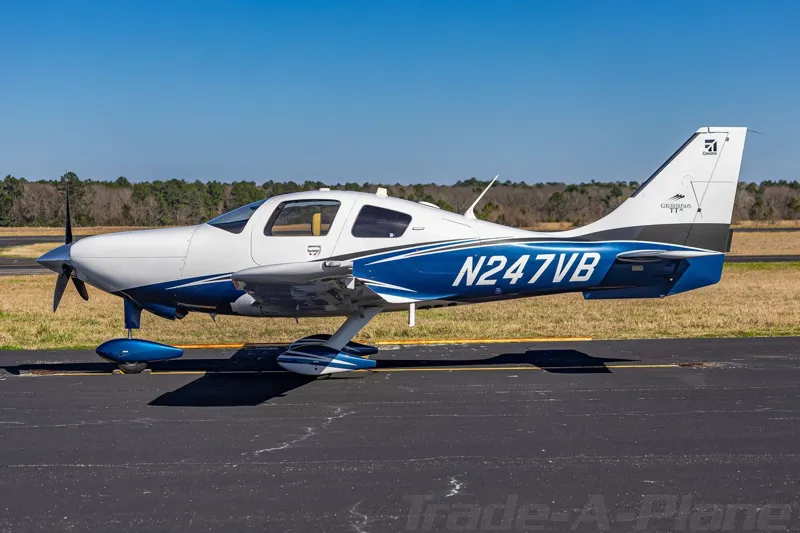
Ask any FBO what the two most-discussed Cessna piston singles are, and the Skyhawk and TTx land at opposite ends of the answer. The 172 Skyhawk owns the training ramp — more logged hours on more runways than any other aircraft in history. The TTx (born as the Columbia 400, later the Corvalis TT) is the outlier Cessna grafted onto the lineup: a low-wing, carbon-composite, turbocharged cross-country machine capable of 235 kt at FL200. The cross-shop arises when a pilot who started in the 172 asks "what's the absolute fastest piston Cessna?" and finds an airplane that shares the brand but almost nothing else.
Live Market Snapshot
Current asking-price market, aggregated across multiple marketplaces · refreshed daily
- For sale now
- 421
- Median asking
- $134,231
- Range
- $61,563–$324,965
- Model years available
- 1956–2026
- For sale now
- 20
- Median asking
- $599,000
- Range
- $364,600–$684,540
- Model years available
- 2013–2017
Live data from AeroGurus, aggregated daily across the used-aircraft market. Figures are current asking prices, not appraisals — confirm with a pre-buy inspection.
Generations Breakdown
Per-generation specs — engine/weight/performance differ materially across production eras.
Per-era “For sale” counts exclude listings with unspecified year and separate variants (RG retractable, Hawk XP), so they may not sum to the total above.
Cessna 172 — 3 generations
| Generation | Years | Engine | MTOW | Cruise | Range | For sale |
|---|---|---|---|---|---|---|
| 172 Continental | 1956–1967 | O-300 | 2300 | 118 | 520 | 137 |
| 172 O-320 150hp | 1968–1976 | O-320-E2D | 2300 | 120 | 585 | 128 |
| 172 O-320 160hp | 1977–1986 | O-320-H2AD/D2J | 2400 | 122 | 585 | 103 |
Cessna TTx — 0 generations
| Generation | Years | Engine | MTOW | Cruise | Range | For sale |
|---|
Safety Record
Absolute counts scale with fleet size — the most-produced types log more events without being less safe. Compare the % fatal.
| NTSB (1982–now) | Cessna 172 | Cessna TTx |
|---|---|---|
| All events | 6810 | — |
| Serious | 542 | — |
| Fatal | 960 | — |
| Fatalities | 1802 | — |
| % Fatal | 14% | — |
Full Specs Comparison
| Spec / Model | Cessna 172 | Cessna TTx |
|---|---|---|
|
|
|
| Price Range | $61,563 – $324,965 | $364,600 – $684,540 |
| Category | Single Engine Piston | Single Engine Piston |
| Model Specifications | ||
| Seats | 4 | 4 |
| Horsepower | 145–160 HP | 310 HP |
| Cruise Speed | 118–122 kts (226 km/h) | 235 kts (435 km/h) |
| Range | 520–585 nm (1,083 km) | 1,250 nm (2,315 km) |
| Service Ceiling | 14,000 ft (4,267 m) | 25,000 ft (7,620 m) |
| Max Gross Weight | 2300–2,400 lbs (1,089 kg) | 3,600 lbs (1,633 kg) |
| Useful Load | 878 lbs (398 kg) | 1,000 lbs (454 kg) |
| Fuel Capacity | 56.0 gal (212 L) | 92.0 gal (348 L) |
| Fuel Burn | 8.6 GPH (33 L/h) | 17.0 GPH (64 L/h) |
| TBO | 1,400 hrs | 2,000 hrs |
| Overhaul Cost | $30,000 | $36,000 |
| Annual Fixed | $18,000 | $25,000 |
| Hourly Variable | $130 | $195 |
| Engines | 1 x Piston | 1 x Piston (Turbocharged) |
Cost of Ownership
EstimateCessna 172
Cessna TTx
Which Should You Buy: Cessna 172 or Cessna TTx?
Bottom line: Choose the Skyhawk if you're building hours, staying VFR, or operating at airports where a composite retractable adds complexity you don't need. Acquisition cost, maintenance ecosystem, and parts availability all favor the 172 — and it's forgiving of student mistakes in ways the TTx is not designed to be. Choose the TTx if you're an IFR-current, high-performance-endorsed pilot who needs 1,000 nm legs at altitude with turbocharged reserve. The speed gap is real: 120 kt vs 235 kt isn't a nuance, it's a different aircraft category sharing a badge. On safety: the TTx has a Garmin G2000 avionics suite with ESP, but no CAPS parachute — don't conflate "Cessna-branded" with "Cirrus-level safety architecture." The Skyhawk's fixed gear removes the gear-up landing risk that's ended many a retractable career.
Pick the 172 if…
- Budget matters — from $61,563 vs $364,600, you save ~$303,037.
- Lower operating cost — ~$130/hr vs $195/hr.
- More inventory — 164 listings vs 24.
Pick the TTx if…
- Faster cruise — 235 kts vs 118 kts.
- Longer range — 1250 nm vs 518 nm.
- Newer design — production from 2013 vs 1956.
Auto-generated from current market data and published specs. Confirm with a pre-buy inspection and professional appraisal.