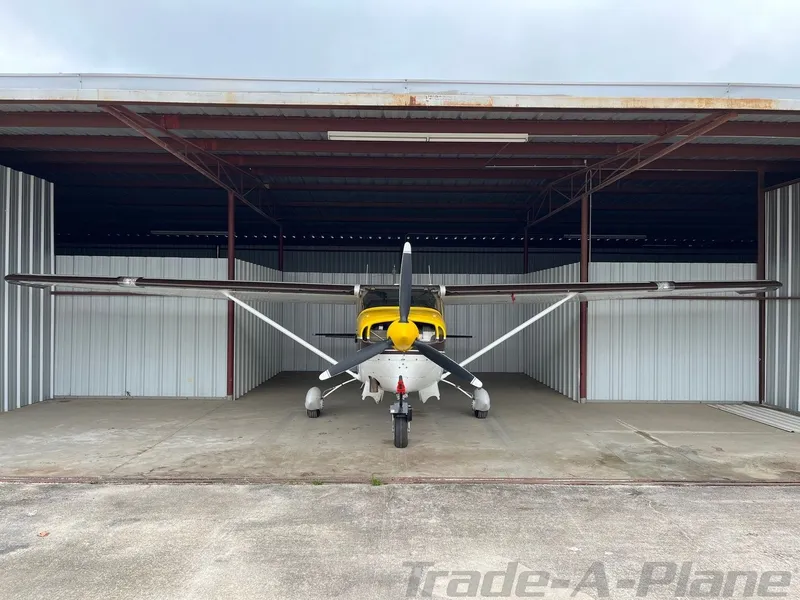
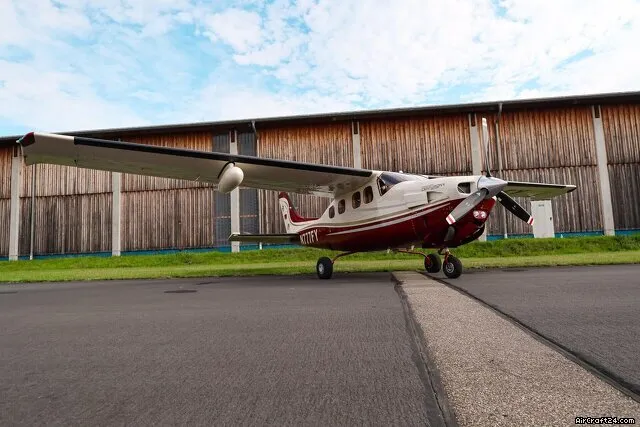
Cessna 206 vs Cessna P210

The Cessna P210 (pressurised six-seat retractable, ~210+ kt with turbo) is the pressurised variant of the 210 Centurion; the 206 (unpressurised six-seat fixed-gear, ~140-150 kt) is the utility six-seater.

Live Market Snapshot

Current asking-price market, aggregated across multiple marketplaces · refreshed daily

Cessna 206
For sale now
160
Median asking
$470,636
Range
$171,175–$898,750
Model years available
1962–2026
Cessna P210
For sale now
25
Median asking
$557,500
Range
$207,750–$956,175
Model years available
1978–1982

Live data from AeroGurus, aggregated daily across the used-aircraft market. Figures are current asking prices, not appraisals — confirm with a pre-buy inspection.

Safety Record

Absolute counts scale with fleet size — the most-produced types log more events without being less safe. Compare the % fatal.

NTSB (1982–now)Cessna 206Cessna P210
All events292257
Serious2339
Fatal5573
Fatalities147152
% Fatal19%28%

Full Specs Comparison

Swipe to see all specs
Spec / Model Cessna 206 Cessna P210
Cessna 206
View 10 listings →
Median $470,636
Cessna P210
View 13 listings →
Median $557,500
Price Range $171,175 – $898,750 $207,750 – $956,175
Category Single Engine Piston Single Engine Piston
Model Specifications
Seats 6 6
Horsepower 300 HP 310 HP
Cruise Speed 142 kts (263 km/h) 180 kts (333 km/h)
Range 840 nm (1,556 km) 850 nm (1,574 km)
Service Ceiling 15,700 ft (4,785 m) 23,000 ft (7,010 m)
Max Gross Weight 3,600 lbs (1,633 kg) 4,000 lbs (1,814 kg)
Useful Load 1,400 lbs (635 kg) 1,200 lbs (544 kg)
Fuel Capacity 92.0 gal (348 L) 90.0 gal (341 L)
Fuel Burn 14.5 GPH (55 L/h) 16.0 GPH (61 L/h)
TBO 2,000 hrs 1,800 hrs
Overhaul Cost $35,000 $35,000
Annual Fixed $22,000 $22,000
Hourly Variable $175 $190
Engines 1 x Piston 1 x Piston (Turbocharged)

Cost of Ownership

Estimate

Cessna 206

Fuel$80/hr
Variable$175/hr
Annual Fixed$22,000/yr
Total (200 hrs/yr) $57,000/yr

Cessna P210

Fuel$88/hr
Variable$190/hr
Annual Fixed$22,000/yr
Total (200 hrs/yr) $60,000/yr

Which Should You Buy: Cessna 206 or Cessna P210?

Bottom line: Choose the P210 for pressurisation and the highest-cruise piston six-seat Cessna ever built — the cross-country flagship. Choose the unpressurised 210 for materially lower acquisition cost; choose the 206 for the lowest-cost six-seat Cessna ownership with utility capability.

Pick the 206 if…

  • Budget matters — from $171,175 vs $207,750, you save ~$36,575.
  • Lower operating cost — ~$175/hr vs $190/hr.

Pick the P210 if…

  • Faster cruise — 180 kts vs 142 kts.
  • Longer range — 850 nm vs 840 nm.
  • Newer design — production from 1978 vs 1964.
  • More inventory — 13 listings vs 10.

Auto-generated from current market data and published specs. Confirm with a pre-buy inspection and professional appraisal.

Frequently Asked Questions

What's the key difference between the P210 and the 206?
Pressurization. The P210N Pressurized Centurion adds a sealed cabin with differential pressure — passengers cruise above weather in comfort without supplemental oxygen. The 206H Stationair is unpressurized — a utility aircraft optimised for payload, cargo access, and operations into rough strips, not altitude comfort. Both seat six, but they serve fundamentally different missions.
P210 or 206 — which is right for my mission?
Buy the P210 if you regularly cruise above 12,500 ft for passenger comfort and speed, fly IFR in weather, and don't need the 206's cargo door or utility configuration. Buy the 206 if payload, cargo access, rough-strip operations, float-base work, or commuter seating density is the priority — and pressurization isn't. The P210 is a personal high-altitude cruiser; the 206 is a working utility aircraft.
How does pressurization change the operation?
In the P210, passengers cruise at an effective cabin altitude of 8,000 ft or below while the aircraft climbs to the high teens — no oxygen masks, no physiological limitation, above most turbulence and icing layers. In the 206, extended flight above 12,500 ft requires supplemental oxygen for all occupants. For IFR charter and personal travel at altitude, the P210's pressurization is a genuine advantage; for short-haul utility and bush work, it adds cost and complexity without operational benefit.
Which is faster and flies higher?
The P210N cruises approximately 195–198 kt at altitude, significantly faster than the 206H's approximately 140 kt. The P210 regularly operates in the high teens to flight level 200; the 206 is typically flown below 12,500 ft. For cross-country speed and altitude capability, the P210 wins clearly; for low-altitude utility work, the 206's slower speed is not a limiting factor.
How do specs compare?
P210N: Continental TSIO-520-CE (310 hp, turbocharged, pressurized), six seats, ~195–198 kt cruise. 206H: Lycoming IO-540-AC1A5 (300 hp, naturally aspirated, unpressurized), six seats, ~140 kt cruise, large cargo door.
How do prices compare?
See the comparison table above for current asking prices. The P210N commands a meaningful premium over the 206H — pressurization, the higher-complexity turbocharged engine, and the pressurization-system maintenance all contribute to higher acquisition and operating costs.
Which is cheaper to operate?
The 206H is substantially less expensive to operate — naturally aspirated IO-540, no pressurization seals or outflow valve to maintain, and simpler overall systems. The P210's TSIO-520 turbocharger, pressurization system, and higher fuel burn at cruise make it the costlier aircraft to run. The P210 earns its cost through altitude performance and speed; the 206H offers better operating economy.
Which should I buy?
P210 for pilots who value altitude performance, IFR weather penetration, and ~200-kt cruise in a pressurized six-seat single. 206H for operators who need utility — cargo door, rough-strip performance, float operations, or payload-optimised short-haul — at the lowest practical operating cost in the Cessna six-seat lineup.
Which is better, Cessna 206 or Cessna P210?
It depends on your mission and budget. The 206 cruises at 142 kts with 840 nm range. The P210 cruises at 180 kts with 850 nm range. Review the specs table above to find which fits your flying profile.
How do prices compare?
Cessna 206: from $225,000. Prices vary by year, hours, avionics, and condition. Always get a pre-buy inspection.
What's the difference between Cessna 206 and Cessna P210?
206 engine: CONTINENTAL IO-520-F (300 hp). P210 engine: CONTINENTAL TSIO-520-R (310 hp). Cruise: 142 vs 180 kts. Range: 840 vs 850 nm.
Which is cheaper to operate per hour?
206: about $175/hr variable cost. P210: about $190/hr variable cost. Variable cost includes fuel, reserves and overhaul accruals. Annual fixed costs (hangar, insurance, annual inspection) add to the total.
Which has more seats and useful load?
206: 6 seats / 1,400 lb useful load. P210: 6 seats / 1,200 lb useful load. Useful load = max gross weight minus empty weight; it determines how much fuel plus payload you can carry.
How does maintenance compare — TBO and overhaul cost?
206: 2,000-hour TBO, overhaul ~$35,000. P210: 1,800-hour TBO, overhaul ~$35,000. Reaching the time-between-overhaul (TBO) triggers a mandatory engine/airframe rebuild that affects resale value.
Disclaimer: All prices and cost estimates are from third-party sources for informational purposes only. Always obtain professional appraisal and inspection before purchase.
Prices updated daily · Data: FAA Registry, NTSB · About our data