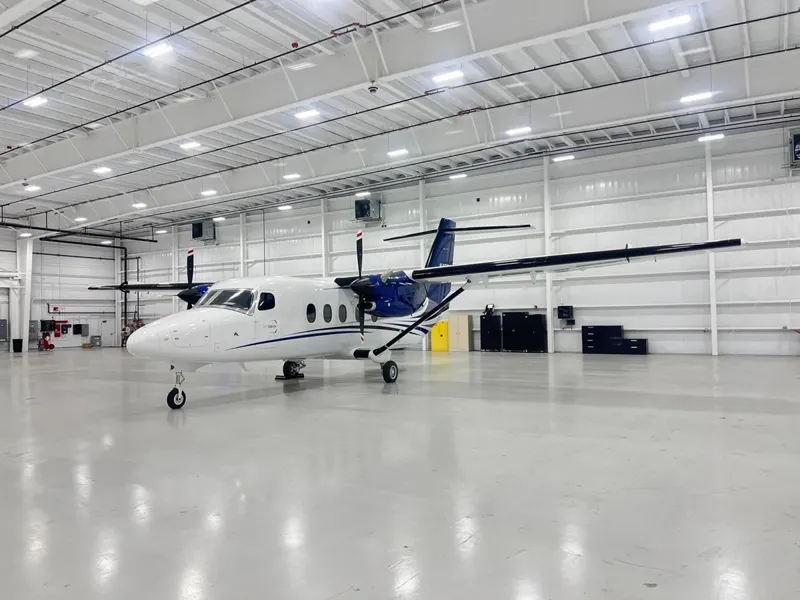
Cessna 408 vs De Havilland DHC-6 Twin Otter

The Cessna 408 SkyCourier and de Havilland DHC-6 Twin Otter are utility turboprop twins — the SkyCourier is the new (2022) high-volume cargo/commuter twin built for FedEx-class feeder operations; the Twin Otter is the legendary STOL utility twin with unmatched rough-field and float capability.

Safety Record

Absolute counts scale with fleet size — the most-produced types log more events without being less safe. Compare the % fatal.

NTSB (1982–now)Cessna 408De Havilland DHC-6 Twin Otter
All events2
Serious1
Fatal1
Fatalities0
% Fatal50%

Full Specs Comparison

Swipe to see all specs
Spec / Model Cessna 408 De Havilland DHC-6 Twin Otter
Cessna 408
View 2 listings →
Price Range
Category Multi Engine Turboprop
Model Specifications
Seats 19 19
Horsepower 1,100 HP
Cruise Speed 200 kts (370 km/h) 182 kts (337 km/h)
Range 900 nm (1,667 km) 799 nm (1,480 km)
Service Ceiling 25,000 ft (7,620 m)
Max Gross Weight 17,500 lbs (7,938 kg) 12,500 lbs (5,670 kg)
Useful Load 6,000 lbs (2,722 kg)
Fuel Capacity 550.0 gal (2082 L)
Fuel Burn 120.0 GPH (454 L/h)
TBO 3,500 hrs
Overhaul Cost $400,000
Annual Fixed $130,000
Hourly Variable $750
Engines 2 x Turboprop 2 x Turboprop

Cost of Ownership

Estimate

Cessna 408

Fuel$660/hr
Variable$750/hr
Annual Fixed$130,000/yr
Total (200 hrs/yr) $280,000/yr

De Havilland DHC-6 Twin Otter

Which Should You Buy: Cessna 408 or De Havilland DHC-6 Twin Otter?

Bottom line: Choose the Twin Otter for genuine STOL, rough-field and float/ski versatility in remote operations. Choose the SkyCourier for modern high-volume cargo/commuter economics, a large flat cabin and new-airframe support on developed strips.

Pick the 408 if…

  • Faster cruise — 200 kts vs 182 kts.
  • Longer range — 900 nm vs 799 nm.

Pick the DHC-6 Twin Otter if…

Auto-generated from current market data and published specs. Confirm with a pre-buy inspection and professional appraisal.

Frequently Asked Questions

What's the key difference between the Cessna 408 SkyCourier and de Havilland Twin Otter?
New vs proven. The Cessna 408 SkyCourier (PT6A-65SC, ~1,100 shp each, 19 seats or large freight configuration, ~200 kt) is a new-generation (2022+) high-wing twin turboprop designed for FedEx-style freight and regional commuter. The de Havilland Canada DHC-6 Twin Otter (PT6A-27, ~620 shp each, 19 seats, ~170 kt, STOL, floatplane-capable) is a 1960s STOL workhorse — still in production, with decades of global utility and amphibious capability.
Cessna 408 or Twin Otter — which 19-seat twin turboprop?
Buy the 408 SkyCourier if: modern freight capability, FedEx-compatible cargo configuration, and higher cruise speed are the mission. Buy the Twin Otter if: STOL performance, floatplane certification, and decades of proven utility in remote and island operations define the requirement. The 408 is the modern freighter; the Twin Otter is the versatile STOL workhorse.
How does the Twin Otter's STOL capability compare?
The Twin Otter is legendary for STOL performance — landing and departing from short, rough, unprepared strips the 408 cannot access. Its floatplane variant is widely used in island and Arctic operations. The 408's higher cruise speed and cargo optimisation suit paved-airport freight operations more than remote bush flying.
How do specs compare?
Cessna 408 SkyCourier: PT6A-65SC (~1,100 shp each), 19 seats or freight, ~200 kt. DHC-6 Twin Otter Series 400: PT6A-27 (~620 shp each), 19 seats, STOL, floatplane-capable, ~170 kt.
Which is cheaper to operate?
The Twin Otter's smaller PT6A-27 engines cost less per overhaul; the 408's larger engines provide more speed. The 408 is a new platform with a newer support ecosystem; the Twin Otter has 50+ years of global support. For remote operations, the Twin Otter's established network is a practical advantage.
Which should I buy?
Cessna 408 SkyCourier for modern freight and 19-seat commuter operations from paved airports — purpose-built for cargo with higher speed. Twin Otter for STOL, float, and remote operations — the proven workhorse with unmatched versatility.
Which is better, Cessna 408 or De Havilland DHC-6 Twin Otter?
It depends on your mission and budget. The 408 cruises at 200 kts with 900 nm range. The DHC-6 Twin Otter cruises at 182 kts with 799 nm range. Review the specs table above to find which fits your flying profile.
How do prices compare?
Prices vary by year, hours, avionics, and condition. Always get a pre-buy inspection.
What's the difference between Cessna 408 and De Havilland DHC-6 Twin Otter?
408 engine: PRATT & WHITNEY PT6A-65B (1100 hp). Cruise: 200 vs 182 kts. Range: 900 vs 799 nm.
Which is cheaper to operate per hour?
408: about $750/hr variable cost. Variable cost includes fuel, reserves and overhaul accruals. Annual fixed costs (hangar, insurance, annual inspection) add to the total.
Which has more seats and useful load?
408: 19 seats / 6,000 lb useful load. DHC-6 Twin Otter: 19 seats. Useful load = max gross weight minus empty weight; it determines how much fuel plus payload you can carry.
How does maintenance compare — TBO and overhaul cost?
408: 3,500-hour TBO, overhaul ~$400,000. Reaching the time-between-overhaul (TBO) triggers a mandatory engine/airframe rebuild that affects resale value.
Disclaimer: All prices and cost estimates are from third-party sources for informational purposes only. Always obtain professional appraisal and inspection before purchase.
Prices updated daily · Data: FAA Registry, NTSB · About our data