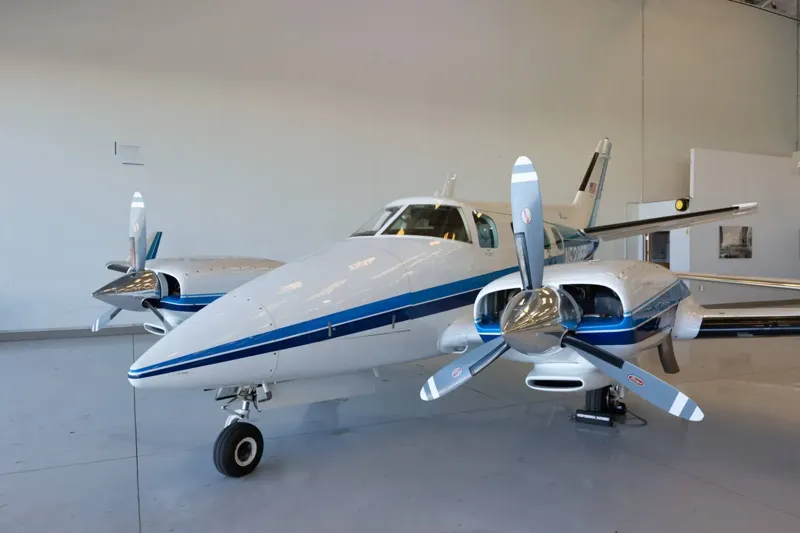
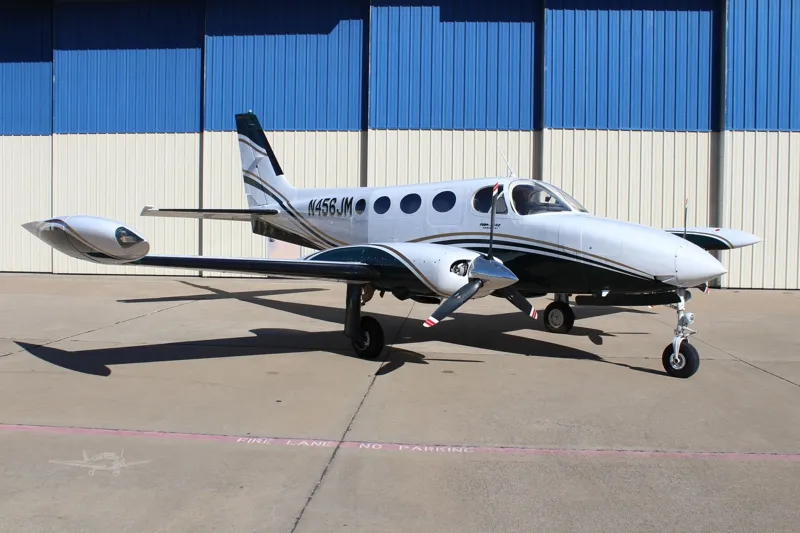
Beechcraft Duke 60 vs Cessna 340

The Beechcraft Duke 60 (pressurised cabin-class piston twin, ~240 kt) and Cessna 340 (pressurised cabin-class piston twin, ~225 kt) are direct competitors — both 1970s-80s pressurised piston twins.

Live Market Snapshot

Current asking-price market, aggregated across multiple marketplaces · refreshed daily

Beechcraft Duke 60
For sale now
22
Median asking
$209,000
Range
$126,300–$528,800
Model years available
1969–1981
Cessna 340
For sale now
81
Median asking
$300,000
Range
$168,823–$523,000
Model years available
1972–1984

Live data from AeroGurus, aggregated daily across the used-aircraft market. Figures are current asking prices, not appraisals — confirm with a pre-buy inspection.

Safety Record

Absolute counts scale with fleet size — the most-produced types log more events without being less safe. Compare the % fatal.

NTSB (1982–now)Beechcraft Duke 60Cessna 340
All events191
Serious7
Fatal72
Fatalities179
% Fatal38%

Full Specs Comparison

Swipe to see all specs
Spec / Model Beechcraft Duke 60 Cessna 340
Beechcraft Duke 60
View 23 listings →
Median $209,000
Cessna 340
View 17 listings →
Median $300,000
Price Range $126,300 – $528,800 $168,823 – $523,000
Category Multi Engine Piston Multi Engine Piston
Model Specifications
Seats 6 6
Horsepower 380 HP 285 HP
Cruise Speed 240 kts (444 km/h) 195 kts (361 km/h)
Range 1,000 nm (1,852 km) 1,180 nm (2,185 km)
Service Ceiling 30,000 ft (9,144 m) 29,800 ft (9,083 m)
Max Gross Weight 6,775 lbs (3,073 kg) 5,990 lbs (2,717 kg)
Useful Load 1,500 lbs (680 kg) 1,840 lbs (835 kg)
Fuel Capacity 163.0 gal (617 L)
Fuel Burn 45.0 GPH (170 L/h) 28.0 GPH (106 L/h)
TBO 1,400 hrs 1,400 hrs
Overhaul Cost $40,000
Annual Fixed $28,000
Hourly Variable $320
Engines 2 x Piston (Turbocharged) 2 x Piston (Turbocharged)

Cost of Ownership

Estimate

Beechcraft Duke 60

Fuel$248/hr

Cessna 340

Fuel$154/hr
Variable$320/hr
Annual Fixed$28,000/yr
Total (200 hrs/yr) $92,000/yr

Which Should You Buy: Beechcraft Duke 60 or Cessna 340?

Bottom line: Choose the Cessna 340 for the broader support network, simpler systems and lower acquisition cost. Choose the Duke for higher cruise, the iconic Beechcraft cabin and the unique T-tail design — accepting much thinner parts support and higher operating cost.

Pick the Duke 60 if…

  • Budget matters — from $126,300 vs $168,823, you save ~$42,523.
  • Faster cruise — 240 kts vs 195 kts.
  • More inventory — 23 listings vs 17.

Pick the 340 if…

  • Longer range — 1180 nm vs 1000 nm.
  • Newer design — production from 1972 vs 1968.

Auto-generated from current market data and published specs. Confirm with a pre-buy inspection and professional appraisal.

Frequently Asked Questions

What's the key difference between the Beechcraft Duke 60 and Cessna 340?
Power and complexity. The Beechcraft Duke 60 (two turbocharged Lycoming TIO-541 engines, ~380 hp each, six seats, pressurized, ~225 kt) was among the most powerful piston twins Beechcraft produced — with systems complexity reflecting its performance. The Cessna 340A (Continental TSIO-520-NB, 310 hp each, five to six seats, pressurized, ~195–215 kt) is the well-supported pressurized twin workhorse. Both are pressurized piston twins; the Duke is faster and significantly more complex.
Duke 60 or Cessna 340 — which pressurized twin?
Buy the Cessna 340 if a well-supported pressurized piston twin with established parts supply and a larger operator community defines the priority. Buy the Duke 60 if maximum piston-twin performance (~225 kt, 380 hp per side) and exclusivity are the mission — accepting the Duke's higher complexity, maintenance overhead, and smaller specialist network.
How does the Duke's maintenance complexity compare?
The Duke 60's turbocharged Lycoming engines are among the more complex piston powerplants ever certified, and maintenance requires specialists familiar with the Duke's unique configuration. The 340's TSIO-520 engines are widely understood. For practical ownership, the 340's conventional twin-turbo systems are meaningfully simpler.
How do specs compare?
Beechcraft Duke 60: two turbocharged Lycoming TIO-541 (~380 hp each), six seats, pressurized, ~225 kt. Cessna 340A: two Continental TSIO-520-NB (310 hp each), five to six seats, pressurized, ~195–215 kt.
Which is cheaper to operate?
The Cessna 340 is less expensive — simpler engines, a larger support network, and lower acquisition cost. The Duke's complex powerplants and smaller specialist community increase maintenance overhead significantly. For practical pressurized-twin ownership, the 340's economics are substantially better.
Which should I buy?
Cessna 340 for a practical, well-supported pressurized piston twin. Duke 60 for the pilot who specifically wants maximum piston-twin performance and exclusivity — accepting its complexity. The 340 is the smart practical buy; the Duke is the enthusiast's choice.
Which is better, Beechcraft Duke 60 or Cessna 340?
It depends on your mission and budget. The Duke 60 cruises at 240 kts with 1,000 nm range. The 340 cruises at 195 kts with 1,180 nm range. Review the specs table above to find which fits your flying profile.
How do prices compare?
Beechcraft Duke 60: from $320,000. Cessna 340: from $490,000. Prices vary by year, hours, avionics, and condition. Always get a pre-buy inspection.
What's the difference between Beechcraft Duke 60 and Cessna 340?
Duke 60 engine: Lycoming TIO-541-E1C4 (380 hp). 340 engine: CONTINENTAL TSIO-520-K (285 hp). Cruise: 240 vs 195 kts. Range: 1000 vs 1180 nm.
Which is cheaper to operate per hour?
340: about $320/hr variable cost. Variable cost includes fuel, reserves and overhaul accruals. Annual fixed costs (hangar, insurance, annual inspection) add to the total.
Which has more seats and useful load?
Duke 60: 6 seats / 1,500 lb useful load. 340: 6 seats / 1,840 lb useful load. Useful load = max gross weight minus empty weight; it determines how much fuel plus payload you can carry.
How does maintenance compare — TBO and overhaul cost?
Duke 60: 1,400-hour TBO. 340: 1,400-hour TBO, overhaul ~$40,000. Reaching the time-between-overhaul (TBO) triggers a mandatory engine/airframe rebuild that affects resale value.
Disclaimer: All prices and cost estimates are from third-party sources for informational purposes only. Always obtain professional appraisal and inspection before purchase.
Prices updated daily · Data: FAA Registry, NTSB · About our data