
Bombardier Challenger 601 vs Bombardier Global Express
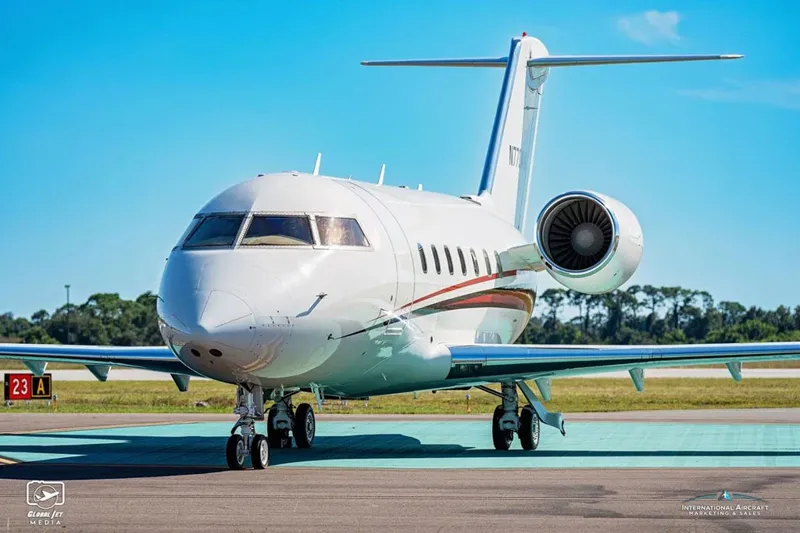
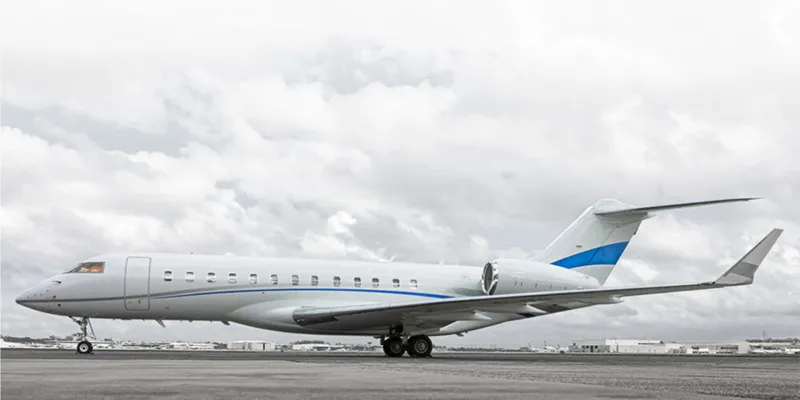
The Bombardier Challenger 601 and the Global Express are both wide-body Bombardier jets, but they were designed for different eras and different ambitions. The Challenger 601 (1983) established the wide-body business jet category — General Electric CF34-3A turbofan engines in a wide, oval-section cabin that offered twelve comfortable seats and a range that covered transatlantic missions at a time when most business jets required fuel stops. The Global Express (certified approximately 1999) answered a different question entirely: what if a business jet could fly London to Tokyo nonstop with a full cabin? Bombardier's answer used Rolls-Royce Deutschland BR710 engines, a new high-speed wing, and a pressurized cabin designed for the physiological demands of ultra-long missions. These are not the same aircraft at different performance levels — they represent two generations of large-cabin aviation separated by fifteen years of engineering progress.
Live Market Snapshot
Current asking-price market, aggregated across multiple marketplaces · refreshed daily
- For sale now
- 26
- Model years available
- 1982–1995
- For sale now
- 34
- Median asking
- $9,622,500
- Range
- $6,722,750–$14,100,000
- Model years available
- 2000–2011
Live data from AeroGurus, aggregated daily across the used-aircraft market. Figures are current asking prices, not appraisals — confirm with a pre-buy inspection.
Full Specs Comparison
| Spec / Model | Bombardier Challenger 601 | Bombardier Global Express |
|---|---|---|
|
|
|
| Price Range | $325,862 – $2,662,500 | $6,722,750 – $14,100,000 |
| Category | Large Cabin Jet | Ultra-Long Range Jet |
| Model Specifications | ||
| Seats | 12 | 16 |
| Cruise Speed | 435 kts (806 km/h) | 481 kts (891 km/h) |
| Range | 3,500 nm (6,482 km) | 5,900 nm (10,927 km) |
| Service Ceiling | 41,000 ft (12,497 m) | 51,000 ft (15,545 m) |
| Max Gross Weight | 45,100 lbs (20,457 kg) | 93,500 lbs (42,412 kg) |
| Useful Load | 12,000 lbs (5,443 kg) | 24,000 lbs (10,886 kg) |
| Fuel Capacity | 2,540.0 gal (9614 L) | 5,560.0 gal (21045 L) |
| Fuel Burn | 300.0 GPH (1136 L/h) | 370.0 GPH (1400 L/h) |
| TBO | 5,000 hrs | 7,500 hrs |
| Overhaul Cost | $900,000 | $1,500,000 |
| Annual Fixed | $600,000 | $1,100,000 |
| Hourly Variable | $4,200 | $6,000 |
| Engines | 2 x Turbofan | 2 x Turbofan |
Cost of Ownership
EstimateBombardier Challenger 601
Bombardier Global Express
Which Should You Buy: Bombardier Challenger 601 or Bombardier Global Express?
Bottom line: Choose the Challenger 601 for the lowest entry into wide-body Bombardier ownership — the CF34-3A engine has an excellent reliability record and widespread General Electric MRO support, the Challenger's cabin is proven comfortable for eight to twelve passengers on regional and transatlantic routes, and the 601's large preowned fleet provides pricing transparency and support depth. Choose the Global Express for ultra-long range and the cabin that goes with it — the BR710's performance and the Global's range approaching 6,000+ nm nonstop change the mission profile in ways no Challenger 601 can match. For operators with Pacific or Middle East routing, the Global Express is a categorically different aircraft. Safety axis: Challenger 601 airframes are now well into their third and fourth decade of service; buyers should commission a thorough structural and fatigue inspection as part of pre-purchase — older high-cycle airframes require more rigorous evaluation than newer aircraft. The Challenger 604 (1996, PW306B engines, updated avionics) is the preferred Challenger family variant for buyers who want the wide-body cabin with more modern systems than the 601 provides.
Pick the Challenger 601 if…
- Budget matters — from $325,862 vs $6,722,750, you save ~$6,396,888.
- Lower operating cost — ~$4200/hr vs $6000/hr.
Pick the Global Express if…
- More seats — 16 vs 12.
- Faster cruise — 481 kts vs 435 kts.
- Longer range — 5900 nm vs 3500 nm.
- Newer design — production from 1999 vs 1983.
- More inventory — 36 listings vs 25.
Auto-generated from current market data and published specs. Confirm with a pre-buy inspection and professional appraisal.