
Bombardier Challenger 300 vs Bombardier Challenger 601
The Bombardier Challenger 601 and Challenger 300 both carry the Challenger name, but they represent two different generations and two different design philosophies of what "Challenger" means. The Challenger 601 (first flown 1982, from the Canadair CL-600 lineage) is a large-cabin jet — fifteen-passenger capacity, wide cabin with stand-up headroom, and General Electric CF34-3A engines — that was built for the operator who wanted an airline-quality cabin in a business jet. The Challenger 300 (2003) is a super-midsize with Honeywell AS907 engines and ten-seat capacity, built on a clean-sheet design philosophy that prioritized high cruise speed, modern avionics, and operational efficiency over maximum cabin volume. The cross-shop arises when buyers compare a larger older aircraft against a smaller but more modern one.
Live Market Snapshot
Current asking-price market, aggregated across multiple marketplaces · refreshed daily
- For sale now
- 42
- Model years available
- 2004–2013
- For sale now
- 26
- Model years available
- 1982–1995
Live data from AeroGurus, aggregated daily across the used-aircraft market. Figures are current asking prices, not appraisals — confirm with a pre-buy inspection.
Full Specs Comparison
| Spec / Model | Bombardier Challenger 300 | Bombardier Challenger 601 |
|---|---|---|
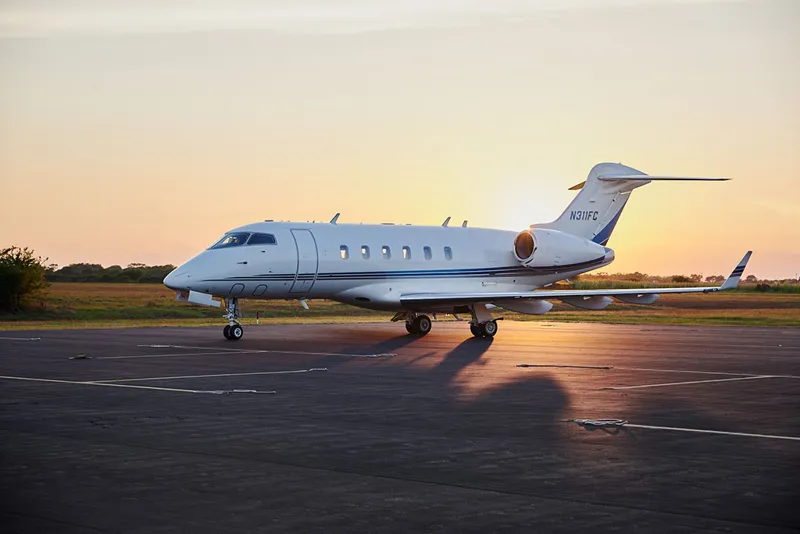
|
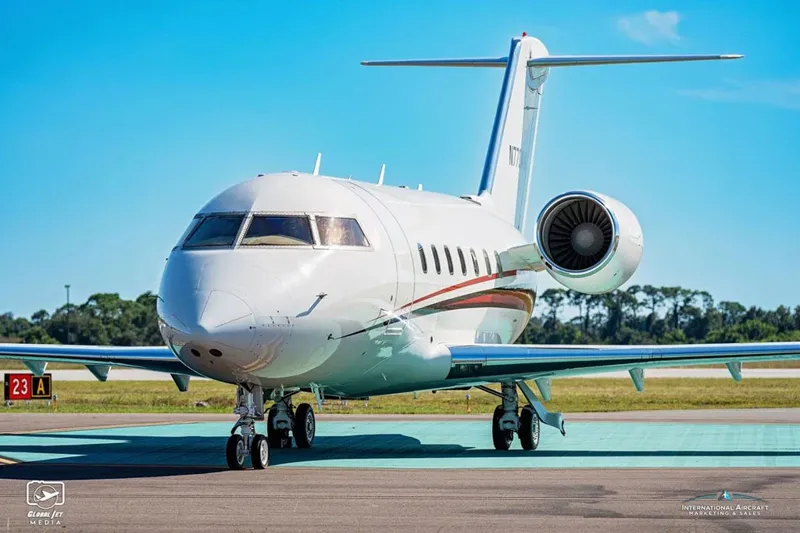
|
|
| Price Range | $5,201,473 – $14,063,250 | $325,862 – $2,662,500 |
| Category | Super-Midsize Jet | Large Cabin Jet |
| Model Specifications | ||
| Seats | 10 | 12 |
| Cruise Speed | 450 kts (833 km/h) | 435 kts (806 km/h) |
| Range | 3,100 nm (5,741 km) | 3,500 nm (6,482 km) |
| Service Ceiling | 45,000 ft (13,716 m) | 41,000 ft (12,497 m) |
| Max Gross Weight | 38,850 lbs (17,622 kg) | 45,100 lbs (20,457 kg) |
| Useful Load | 9,500 lbs (4,309 kg) | 12,000 lbs (5,443 kg) |
| Fuel Capacity | 1,430.0 gal (5413 L) | 2,540.0 gal (9614 L) |
| Fuel Burn | 260.0 GPH (984 L/h) | 300.0 GPH (1136 L/h) |
| TBO | 5,000 hrs | 5,000 hrs |
| Overhaul Cost | $700,000 | $900,000 |
| Annual Fixed | $500,000 | $600,000 |
| Hourly Variable | $3,500 | $4,200 |
| Engines | 2 x Turbofan | 2 x Turbofan |
Cost of Ownership
EstimateBombardier Challenger 300
Bombardier Challenger 601
Which Should You Buy: Bombardier Challenger 300 or Bombardier Challenger 601?
Bottom line: Choose the Challenger 300 for modern avionics, better fuel efficiency, and a design philosophy that produces measurably lower per-hour operating costs than the 601. The AS907 engines are fuel-efficient and have strong support; the 300's avionics are modern enough to operate comfortably into the next decade. Choose the Challenger 601 for raw cabin volume — the 601's wide-body-inspired cross-section and stand-up headroom make it the choice when fifteen-passenger capacity or a truly sprawling cabin layout defines the mission. The 601's GE CF34-3A engines have excellent support through GE and authorized MRO; the Challenger 601 is a proven platform with decades of fleet data. Safety axis: the Challenger 300's modern avionics architecture (Rockwell Collins Pro Line 21 with EGPWS, TCAS II, SVS) provides better situational awareness tools than the 601's vintage avionics package. Both are FAR Part 25 certified aircraft; the 300's more modern design is simply better equipped for crew workload reduction.
Pick the Challenger 300 if…
- Lower operating cost — ~$3500/hr vs $4200/hr.
- Faster cruise — 450 kts vs 435 kts.
- Newer design — production from 2004 vs 1983.
- More inventory — 41 listings vs 25.
Pick the Challenger 601 if…
- Budget matters — from $325,862 vs $5,201,473, you save ~$4,875,611.
- More seats — 12 vs 10.
- Longer range — 3500 nm vs 3100 nm.
Auto-generated from current market data and published specs. Confirm with a pre-buy inspection and professional appraisal.