
Beechcraft King Air 200 vs Beechcraft King Air 300
The King Air 200 and the King Air 300 look similar from the ramp — same Beechcraft lineage, same pressurized twin turboprop configuration — but they represent different points in the King Air performance envelope. The King Air 200 (B200 series) used PT6A-42 engines throughout most of its production and became the most widely operated King Air variant, prized for operating economy, parts availability, and a worldwide support network that no other turboprop matches. The King Air 300 (introduced in 1984, discontinued in approximately 1997) pushed the same basic airframe harder: PT6A-60A engines producing significantly more power, a heavier gross weight, and cruise performance that approached the upper end of the turboprop envelope before the King Air 350's stretched fuselage changed the conversation. The 300 occupies a narrow used-market window — faster than the 200, same cabin, more expensive to operate, largely superseded by the 350 — and understanding that position honestly is key to evaluating it.
Live Market Snapshot
Current asking-price market, aggregated across multiple marketplaces · re-checked on a rolling daily cycle
- For sale now
- 95
- Median asking
- $1,495,000
- Range
- $253,500–$3,170,000
- Model years available
- 1971–2013
- For sale now
- 17
- Median asking
- $1,881,810
- Range
- $947,809–$2,547,000
- Model years available
- 1984–1993
Live data from AeroGurus, aggregated daily across the used-aircraft market. Figures are current asking prices, not appraisals — confirm with a pre-buy inspection.
Full Specs Comparison
| Spec / Model | Beechcraft King Air 200 | Beechcraft King Air 300 |
|---|---|---|
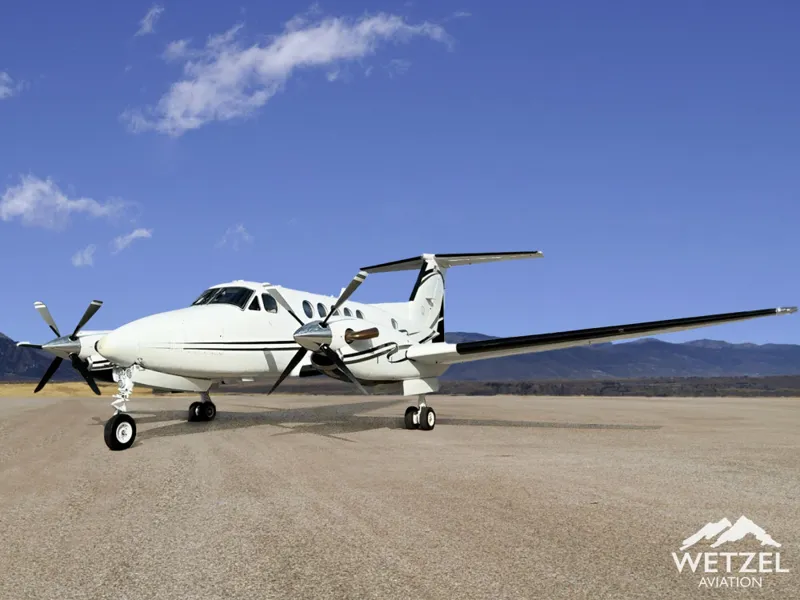
|
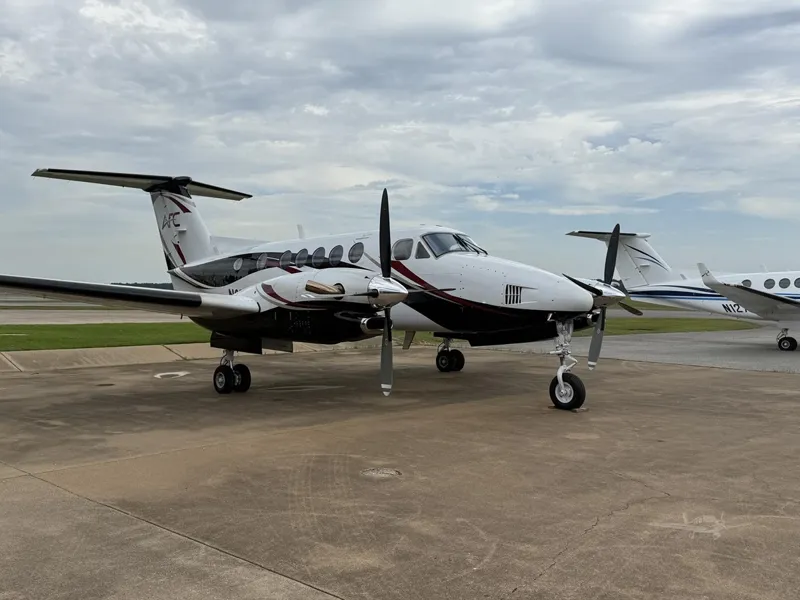
|
|
| Price Range | $253,500 – $3,170,000 | $947,809 – $2,547,000 |
| Category | Multi Engine Turboprop | Multi Engine Turboprop |
| Model Specifications | ||
| Seats | 9 | 9 |
| Horsepower | 850 HP | 1,050 HP |
| Cruise Speed | 272 kts (504 km/h) | 295 kts (546 km/h) |
| Range | 1,580 nm (2,926 km) | 1,700 nm (3,148 km) |
| Service Ceiling | 35,000 ft (10,668 m) | 35,000 ft (10,668 m) |
| Max Gross Weight | 12,500 lbs (5,670 kg) | 14,000 lbs (6,350 kg) |
| Useful Load | 4,045 lbs (1,835 kg) | 4,200 lbs (1,905 kg) |
| Fuel Capacity | 544.0 gal (2059 L) | 544.0 gal (2059 L) |
| Fuel Burn | 80.0 GPH (303 L/h) | 85.0 GPH (322 L/h) |
| TBO | 3,600 hrs | 3,600 hrs |
| Overhaul Cost | $380,000 | $400,000 |
| Annual Fixed | $180,000 | $200,000 |
| Hourly Variable | $950 | $1,050 |
| Engines | 2 x Turboprop | 2 x Turboprop |
Cost of Ownership
EstimateBeechcraft King Air 200
Beechcraft King Air 300
Which Should You Buy: Beechcraft King Air 200 or Beechcraft King Air 300?
Bottom line: Choose the King Air 200 (B200) for the deepest support ecosystem, broadest MRO network, and the most favorable balance of performance and operating cost in the King Air family. For most corporate and owner-operator missions under 1,200 nm at 150–400 annual hours, the B200 is the optimum King Air — enough performance for the mission, economics that hold up under realistic utilization, and a resale market that functions well. Choose the King Air 300 if you find one in excellent condition at a price that reflects its smaller used-market presence and higher operating costs — the PT6A-60A gives the 300 a meaningful speed and climb advantage over the B200, and for buyers who want King Air performance without the 350's size, a well-maintained 300 can be the answer. Safety axis: the King Air 300's smaller production run means fewer airframes in circulation, a more specialized MRO base than the B200, and less frequent pre-purchase inspection experience among general King Air shops. Pre-purchase inspection by a King Air 300-specialist shop is strongly recommended — and deferred maintenance items on the 300 can be more expensive to correct than on the more common B200.
Pick the King Air 200 if…
- Budget matters — from $253,500 vs $947,809, you save ~$694,309.
- Lower operating cost — ~$950/hr vs $1050/hr.
- More inventory — 39 listings vs 18.
Pick the King Air 300 if…
- Faster cruise — 295 kts vs 272 kts.
- Longer range — 1700 nm vs 1580 nm.
- Newer design — production from 1984 vs 1974.
Auto-generated from current market data and published specs. Confirm with a pre-buy inspection and professional appraisal.