
Beechcraft Baron 58 vs Piper Seneca
The Beechcraft Baron 58 and Piper Seneca V are the two standard-bearers of the light piston twin segment — the aircraft that pilot schools use as twins, that charter operators rely on for short-segment passenger service, and that owner-operators argue about on every hangar floor. The Baron 58 brings 325 hp per side from Continental IO-550-C engines, Beechcraft's legendary build quality, and a cabin that's been refined since 1969. The Seneca V brings 220 hp per side turbocharged Continental TSIO-360-RB engines (counter-rotating), better fuel efficiency, and the fact that Piper still makes it new. The cross-shop is brand loyalty meets specifications.
Live Market Snapshot
Current asking-price market, aggregated across multiple marketplaces · refreshed daily
- For sale now
- 121
- Median asking
- $449,000
- Range
- $189,635–$1,319,400
- Model years available
- 1970–2024
- For sale now
- 111
- Median asking
- $227,990
- Range
- $89,465–$640,128
- Model years available
- 1967–2023
Live data from AeroGurus, aggregated daily across the used-aircraft market. Figures are current asking prices, not appraisals — confirm with a pre-buy inspection.
Safety Record
Absolute counts scale with fleet size — the most-produced types log more events without being less safe. Compare the % fatal.
| NTSB (1982–now) | Beechcraft Baron 58 | Piper Seneca |
|---|---|---|
| All events | — | 2 |
| Serious | — | 0 |
| Fatal | — | 0 |
| Fatalities | — | 0 |
| % Fatal | — | 0% |
Full Specs Comparison
| Spec / Model | Beechcraft Baron 58 | Piper Seneca |
|---|---|---|
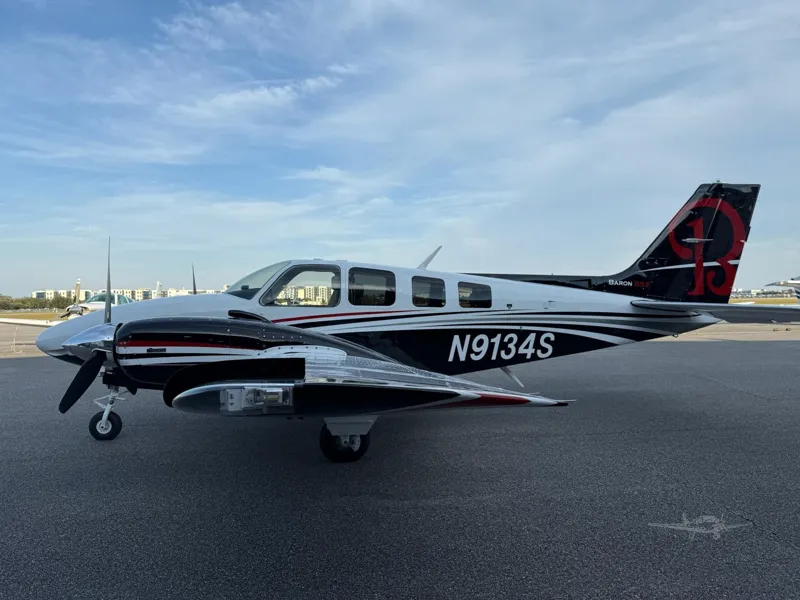
|
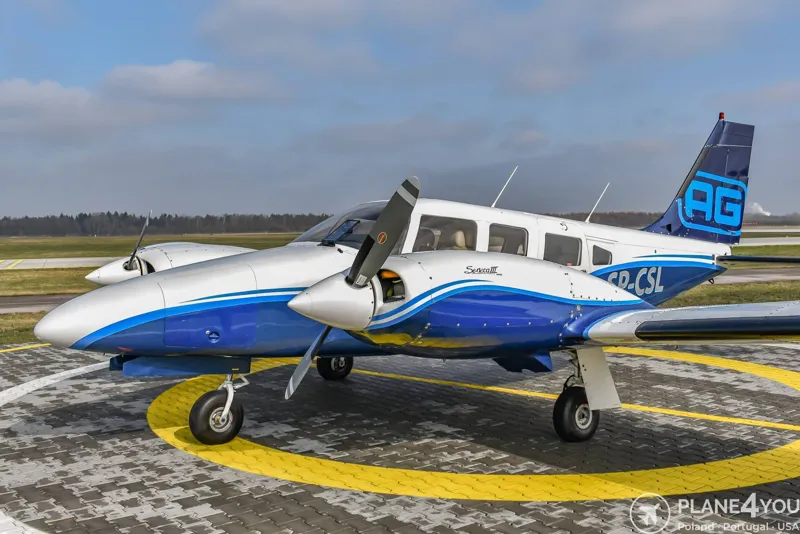
|
|
| Price Range | $189,635 – $1,319,400 | $89,465 – $640,128 |
| Category | Multi Engine Piston | Multi Engine Piston |
| Model Specifications | ||
| Seats | 6 | 6 |
| Horsepower | 300 HP | 220 HP |
| Cruise Speed | 190 kts (352 km/h) | 180 kts (333 km/h) |
| Range | 1,225 nm (2,269 km) | 750 nm (1,389 km) |
| Service Ceiling | 20,688 ft (6,306 m) | 25,000 ft (7,620 m) |
| Max Gross Weight | 5,500 lbs (2,495 kg) | 4,750 lbs (2,155 kg) |
| Useful Load | 1,846 lbs (837 kg) | 1,590 lbs (721 kg) |
| Fuel Capacity | 166.0 gal (628 L) | 123.0 gal (466 L) |
| Fuel Burn | 28.0 GPH (106 L/h) | 22.0 GPH (83 L/h) |
| TBO | 1,700 hrs | 1,800 hrs |
| Overhaul Cost | $40,000 | $40,000 |
| Annual Fixed | $28,000 | $25,000 |
| Hourly Variable | $310 | $280 |
| Engines | 2 x Piston | 2 x Piston (Turbocharged) |
Cost of Ownership
EstimateBeechcraft Baron 58
Piper Seneca
Which Should You Buy: Beechcraft Baron 58 or Piper Seneca?
Bottom line: Choose the Baron 58 for raw performance — the IO-550-C's 325 hp per side gives the Baron a single-engine climb rate, takeoff roll, and altitude capability that the Seneca V at 220 hp cannot match. The Baron is faster (190 kt vs 165 kt), climbs faster, and handles density altitude more gracefully. For a pilot who wants the best-performing piston twin in the class, the Baron wins on numbers. Choose the Seneca V for lower fuel burn and the option to buy new — the Seneca's counter-rotating engines eliminate the critical-engine problem, and the turbocharged TSIO-360s deliver better high-altitude efficiency than the Baron's normally-aspirated IO-550s (in the normally-aspirated Baron 58 variant). Safety axis: the Seneca V's counter-rotating engines eliminate the critical engine asymmetry that makes Baron 58 single-engine emergencies more demanding — the Baron's single-engine response must correctly identify the failed engine and take rudder accordingly. Seneca V pilots have symmetric single-engine behavior, a genuine training and emergency simplification.
Pick the Baron 58 if…
- Faster cruise — 190 kts vs 180 kts.
- Longer range — 1225 nm vs 750 nm.
Pick the Seneca if…
- Budget matters — from $89,465 vs $189,635, you save ~$100,170.
- Lower operating cost — ~$280/hr vs $310/hr.
- Newer design — production from 1972 vs 1970.
- More inventory — 114 listings vs 74.
Auto-generated from current market data and published specs. Confirm with a pre-buy inspection and professional appraisal.